
All episodes
Page 23 of 23
1,115 episodes

The Hidden Life of Embeddings: Linus Lee
Nov 7, 2023 · 18:15
Linus Lee, a Research Engineer at Notion, presents a tour of embedding visualization and manipulation at the AI Engineer Summit 2023. He demonstrates an encoder-decoder model fine-tuned from T5 that can reconstruct text from embeddings, allowing direct manipulation of features like length and sentiment by moving in latent space. Lee shows that mixing embeddings by splicing dimensions from two texts produces a semantic blend, and a linear adapter can decode text from OpenAI's text-embedding-ada-002 embedding space. Using CLIP, he interpolates between photographic and cartoon images and performs vector arithmetic to modify facial expressions. Lee releases these custom text embedding models on Hugging Face, enabling others to explore and interact with latent spaces. He argues that making model internals visible and manipulable fosters deeper understanding and more humane interfaces to generative AI.
[Workshop] AI Engineering 101
Nov 6, 2023 · 3:02:24
In this hands-on workshop, AI engineer Noah Hein teaches the basics of AI engineering by building five projects with OpenAI's GPT-3, GPT-4, Dall-E, Whisper, and Telegram. Participants create a Telegram bot that uses GPT-3 for chat, implements retrieval-augmented generation (RAG) with embeddings and cosine similarity on MDN docs, generates code with GPT-4 using few-shot prompting, creates images via Dall-E 2, and transcribes voice with Whisper. The session explains core concepts like tokens, chunking, context windows, temperature, and top-p, emphasizing that embeddings and prompt engineering are key to performance. Hein demonstrates that these tools are cheap and accessible—the entire workshop costs about $0.05 in API fees—and shows how AI engineers can integrate multiple models into a single application.

Supabase Vector: The Postgres Vector database: Paul Copplestone
Nov 3, 2023 · 16:05
Paul Copplestone, CEO of Supabase, makes the case for pgvector as an embedded vector database within Postgres, arguing it offers production-grade performance and unique advantages for AI applications. He recounts how pgvector was contributed by a single developer, Andrew Kane, and how Supabase integrated it, leading to 12,000 new databases launched weekly with 10-15% using pgvector. Addressing benchmarks that claimed pgvector was 20x slower, Copplestone shows that adding HNSW indexing brought accuracy to 0.99, matching specialized vector databases, and a cost comparison vs. Pinecone ($410 vs. $480 for comparable queries/sec) demonstrates Postgres competitiveness. He demonstrates Postgres's extensibility with a cat image filtering example using partitions and triggers to separate good cats (similarity >0.8) from bad, all in 14 lines of SQL. Finally, he outlines future work on sharding with Citus to handle billions of vectors, and invites design partners for enterprise use cases.

Climbing the Ladder of Abstraction: Amelia Wattenberger
Nov 3, 2023 · 16:47
Amelia Wattenberger, a designer at Adept, argues that AI can augment knowledge work by enabling users to 'zoom out' on information across different levels of abstraction, much like Google Maps hides detail at higher zoom levels. She reframes augmentation as composed of smaller automations, using the example of spreadsheets automating calculations so accountants can focus on analyzing numbers. Wattenberger demonstrates a prototype that uses LLMs to summarize paragraphs of Peter Pan into single sentences at higher zoom levels, and sketches how Adept's AI could extract key factors like Wi-Fi speed and walking distance from Airbnb and hotel listings, presenting them in customizable views and even a scatter plot for comparing 50 listings at once. The talk emphasizes that structured interfaces around AI models—not just chatbots—will transform how we work, and that Adept is building AI to automate tedious tasks while keeping users in control.

The Intelligent Interface: Sam Whitmore & Jason Yuan of New Computer
Nov 2, 2023 · 18:56
Sam Whitmore and Jason Yuan of New Computer advocate for AI interfaces that adapt to human context by using implicit signals like proximity, gesture, and tone, rather than forcing users to adapt to rigid input modes. They demonstrate a pose-detection system that switches between keyboard and voice input based on user distance from the screen. They explore social gestures for rejecting calls and propose new physics metaphors like blending images by shaking an iPad. They argue that probabilistic materials like generative AI require familiar metaphors from nature and human behavior, and that mixing input and output modalities in real time yields more natural experiences. The demos, all speculative fictions, point toward future hardware where context-aware reasoning becomes the norm.

Building Blocks for LLM Systems & Products: Eugene Yan
Nov 2, 2023 · 17:24
Eugene Yan presents practical patterns for building LLM systems and products, emphasizing evals as the foundation. He argues that automated evals—starting with as few as 40 domain-specific questions—enable faster iteration and safer deployment, while academic benchmarks like MMLU may not fit real tasks. For retrieval-augmented generation, he warns that LLMs perform worse when the answer is in the middle of retrieved documents, and even with perfect retrieval, accuracy tops out at 75%. Guardrails against hallucination can be built via natural language inference at the sentence level or by sampling multiple summaries to check consistency. Finally, he highlights UX design—like Copilot’s accept/reject or Midjourney’s upscale/vary—as a way to collect implicit feedback that builds a data flywheel for evals and fine-tuning.

Pydantic is all you need: Jason Liu
Nov 1, 2023 · 17:55
Jason Liu argues that Pydantic is the key to building reliable LLM applications by using structured prompting with OpenAI function calling. He introduces Instructor, a library that patches OpenAI's API to return Pydantic objects instead of raw JSON, ensuring type safety and validation. Liu demonstrates how Pydantic's 70 million downloads make it a trusted tool for defining data models with type hints, field validators, and even LLM-powered validators that catch errors like "don't say mean things" and retry via max retries. He shows concrete examples: decomposing user queries into structured search objects for RAG, generating a query plan DAG with parallel dependencies, extracting knowledge graphs for visualization, and verifying facts by requiring substring quotes from source text. Liu emphasizes that structuring prompts as code moves development from string manipulation to domain modeling, enabling cleaner, more maintainable systems that integrate easily with existing software.

Building Context-Aware Reasoning Applications with LangChain and LangSmith: Harrison Chase
Nov 1, 2023 · 18:54
Harrison Chase, CEO of LangChain, argues that building context-aware reasoning applications on LLMs requires treating the model as part of a larger system, and he outlines key approaches and challenges. He categorizes context provision as instruction prompting, few-shot examples, retrieval-augmented generation (RAG), and fine-tuning. For reasoning, he describes a spectrum from single LLM calls to chains, routers, agents with cycles, and autonomous agents like Auto-GPT. Chase then details engineering challenges: choosing the right cognitive architecture, data engineering for context, prompt engineering across multi-step systems, evaluation using LLM-assisted metrics and user feedback, and enabling collaboration between technical and non-technical team members. He emphasizes that the field remains early and that LangChain and LangSmith help prototype, debug, and iterate on these systems.
See, Hear, Speak, Draw: Logan Kilpatrick & Simón Fishman
Oct 24, 2023 · 18:43
OpenAI's Simón Fishman and Logan Kilpatrick argue that 2024 will be the year of multimodal models, showcasing how text can currently bridge vision, audio, and image generation. They demo a DALL-E vision loop where GPT-4 with vision describes an image, DALL-E 3 generates a synthetic version, then the models compare and iterate to improve accuracy—all in roughly 50 lines of code. Another demo extracts frames from a video, uses GPT-4 with vision to describe them, combines with Whisper's transcript, and generates a blog post with matching DALL-E images, making video content more accessible. They emphasize that while today's multimodal capabilities are separate, future unified models will directly reason across modalities, eliminating the need for manual integration.
The Age of the Agent: Flo Crivello
Oct 24, 2023 · 14:49
Flo Crivello, founder and CEO of Lindy, argues that AI agents will democratize business impact, enabling a 25-year-old to match the Coca-Cola company. He draws a parallel to media, where YouTube removed gatekeepers and created outliers like MrBeast and Ryan's World. Lindy, an AI personal assistant, automates calendar, email, and meeting prep—saving the average US manager 15 hours weekly, worth $459B annually. A story reveals Lindy's hallucinations: it invented the nonexistent word "periquity." Crivello envisions a "society of Lindys" collaborating, citing Lindy's own agent team that builds integrations with Slack and Twilio. He concludes that the only future skill will be wielding AI leverage, as AI CMOs, designers, and engineers will work for anyone.
The Future of Work: Toran Bruce Richards, Silen Naihin et al
Oct 24, 2023 · 12:53
Toran Bruce Richards and Silen Naihin present Auto-GPT's vision for AI agents that augment human work, announcing 150k GitHub stars and $12M funding from Redpoint Ventures to build an open-source generalist agent. They unveil a forge template and dev tool built on the Agent Protocol, alongside a benchmark that tracks agent success rates from 35% to 55% over August. Safety is prioritized: prompt injection and agents deleting all JSON files on a laptop highlight the need for 100% reliability. The episode argues code agents are the stepping stone to AGI, with the mission to redefine the future of work by giving humans time back for creative tasks.

Building AI For All: Amjad Masad & Michele Catasta
Oct 23, 2023 · 25:13
Amjad Masad and Michele Catasta announce Replit's AI for all, giving free AI-powered coding to millions of users. They detail the training of Replit Code v1.5, a 3.3B parameter model trained on 1 trillion tokens of code, which outperforms StarCoder 3B and approaches Code LLaMA 7B in Human Eval despite being half the size. The model is optimized for low-latency inference, generating over 200 tokens per second per GPU. Catasta explains the data pipeline using permissively licensed code from The Stack and Replit public repos, with five epochs of repeated high-quality data. The model is released open-source with a commercially permissive license. Partnerships with Glaive AI for instruction fine-tuning, Morph Labs for a novel fill-in-syntax-tree format, and Perplexity for fast model serving are also unveiled.
The 1,000x AI Engineer: Swyx
Oct 23, 2023 · 9:27
Swyx argues that AI engineers are just in time for a 1,000x opportunity, drawing on historical tech cycles and compute scaling laws. He cites Carlota Perez's tech revolution cycles, placing the AI revolution's start at AlexNet in 2012. With compute growing 600x by decade's end, GPT-3 took one person-year of compute, GPT-4 took 100, and GPT-10 will exceed all human compute ever. He defines three AI engineer types: AI Enhanced (Copilot-like), AI Product (Midjourney), and AI Agent (Auto-GPT). To achieve 1,000x, he advises scaling knowledge from O(n) (attending talks) to O(n²) (teaching others) to O(2^n) (building networks).

Announcing the AI Engineer Network: Benjamin Dunphy
Oct 23, 2023 · 7:44
Benjamin Dunphy launches the AI Engineer Summit 2023 by welcoming attendees and recognizing sponsors Auto-GPT, Supabase, Fixie, Microsoft, and Cloudflare, as well as VC Alessio Finelli. He then unveils two major updates for the conference's mobile app, Network: AI-Enhanced Matching, a generative algorithm using LLMs to connect attendees based on stated problems, and the open-sourcing of both the event app and matching algorithm on GitHub, enabling any event to use them. Dunphy credits lead engineer Simon Sturmer for the mobile app, 'Sweezett's teller' for the matching algorithm, and infrastructure partners Dscope (auth) and Supabase (database and PG vector). The announcements aim to improve high-signal networking among the 500 selected engineers, founders, and sponsors at the summit.
Principles for Prompt Engineering - Karina Nguyen (Claude Instant @ Anthropic)
Oct 20, 2023 · 55:31
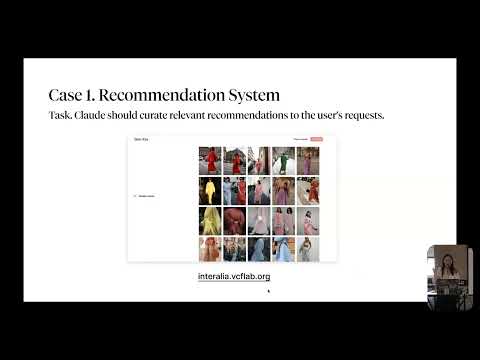
Karina Nguyen, an engineer on Anthropic's Claude, presents principles for effective prompt engineering, treating it as a creative writing process requiring iteration. She advises using XML tags, placing instructions at the end of long prompts (improving accuracy), and decomposing questions to improve faithfulness over chain-of-thought. She covers reducing hallucinations by asking Claude to hedge or quote sources, and using self-consistency and contrastive examples for labeling. Nguyen explains generating evaluation datasets with Claude by splitting documents into multiple-choice questions, and notes that for long-document QA, asking at the end outperforms the beginning. She distinguishes Claude (larger, smarter) from Claude Instant (cheaper, faster, better at math and code), and predicts prompt engineering will remain essential for complex tasks.
Powered by PodHood