
Content Engineering
Episodes from AI Engineer about Content Engineering.
7 episodes
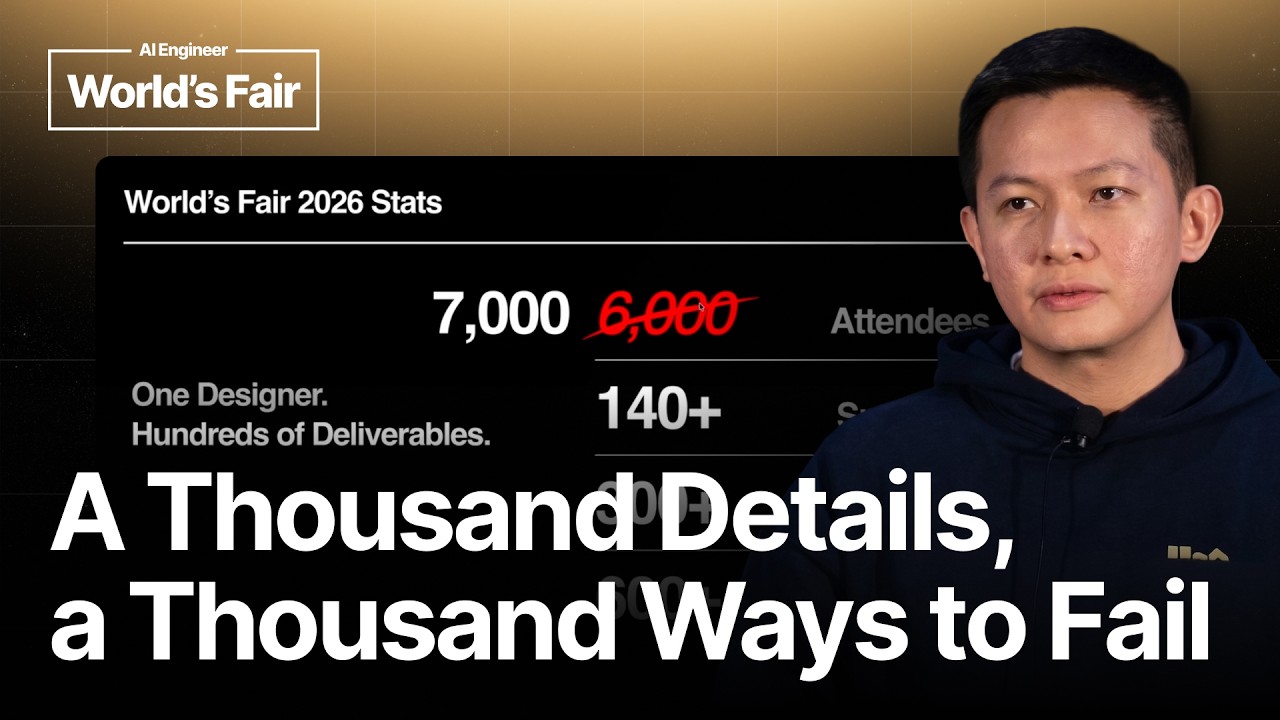
One Designer + AI. Hundreds of Deliverables. — Vincent Wendy, AI Engineer
Sep 10, 2026 · 16:48
Vincent Wendy, the sole senior creative designer at AI Engineer, explains how he alone designs for a conference that grew to 7,000 attendees, 140+ sponsors, 300+ speakers, and 600+ sessions. His five-part method—build the foundation first, make designs reusable, automate workflows, validate output, and remove friction—starts with a tightly defined design system so LLMs like Devin and GPT cannot invent their own font sizes, letting marketing build emails and flyers from the website alone. Room schedules once laid out by hand in Figma now pull fresh from live data via Devin, export to PNG, and ship to screens on a flash drive. A generator produces pixel-perfect announcement graphics and trading cards for all 300 speakers, and Devin matches photographers' shots to the right speaker, like identifying Jason Liu. Devin also caught every missing sponsor logo on the 140-plus-logo lobby banner and the conference t-shirt, and added an edit button to the schedule tool the morning one was needed—so with tools no longer the constraint, having a real problem is the advantage.
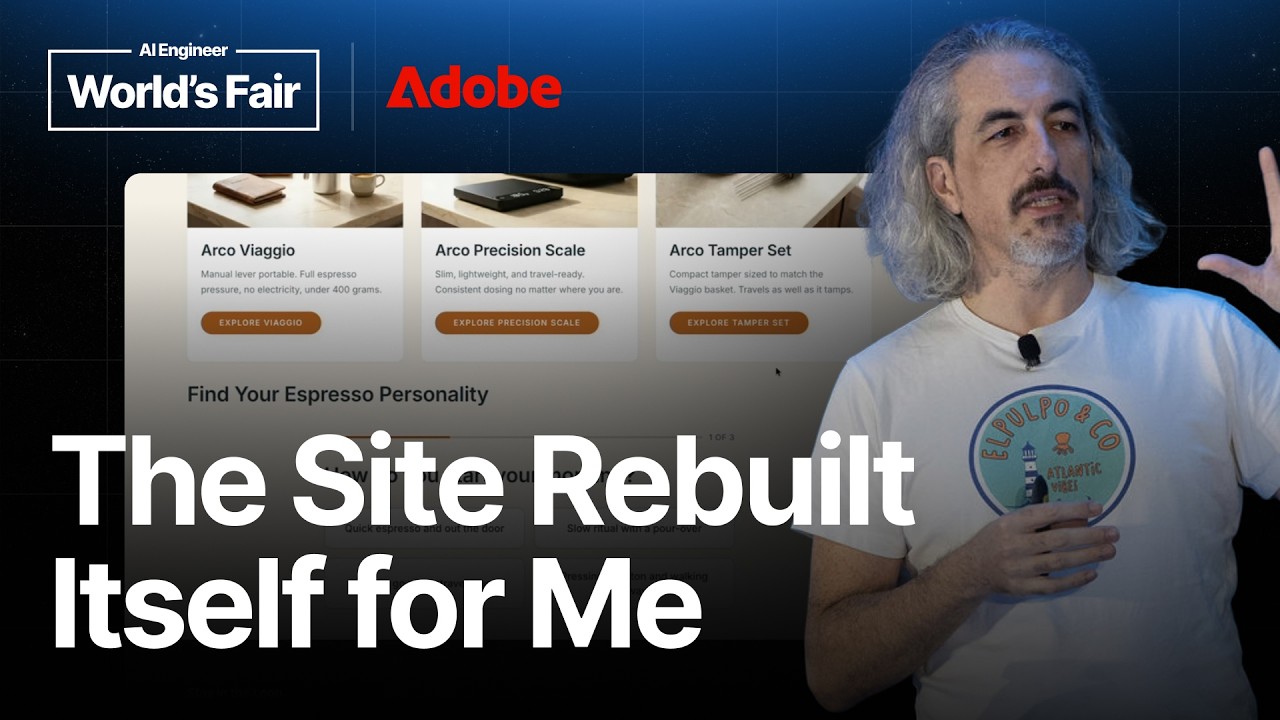
Agentic Sites: Building Hyper Personalized Websites — Carlos Sanchez, Adobe
Aug 29, 2026 · 20:43
Carlos Sanchez, principal scientist at Adobe, argues that agentic sites can deliver hyper-personalized web pages in real time by treating the whole site as a corpus and generating only specific blocks. He demonstrates a coffee-machine site that builds a personalized camping page in 1.64 seconds using Google's Gemma 4 on Cerebras at 2,300 tokens per second. Model choice must be evaluated per site for accuracy and speed, he says, showing 1.1 seconds against 4.6 for the runner-up, and this doesn't need a frontier model because work is choosing and arranging blocks. Marketers define personas in natural language, browsing signals feed an 'audience of one' loop for pre-generated recommendations, and a tool builds an agentic site for any URL in less than an hour.
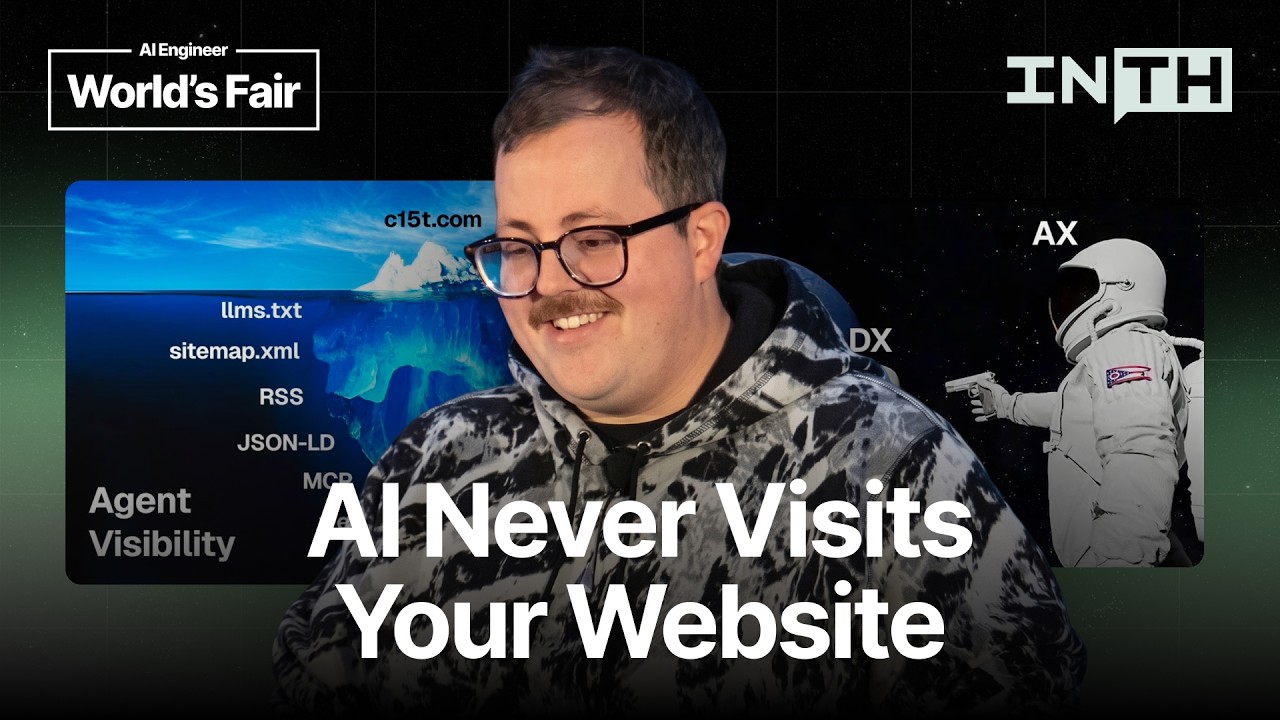
How We Got LLMs to Recommend Our Open Source Library — Christopher Burns, Inth
Aug 26, 2026 · 16:27
Christopher Burns, founder of Inth and creator of the open source consent banner library c15t, explains how he got LLMs to recommend his library: after April 13th, Claude, ChatGPT, Codex, and Gemini became its number one inbound source, with c15t at 3 million NPM downloads and 45% month-on-month growth. He argues no single fix works, so he built LeadType, a framework-neutral docs pipeline that generates agent-facing files from MDX. He recommends hand-writing llms.txt (40 good lines beat 1,000), shipping markdown via .md, content negotiation, or mode=agent, and bundling markdown docs plus AGENTS.md in the npm package since coding agents read node_modules, not websites, saving nearly 50% of tokens. He also covers Web MCP tools and Aura AI's agent-readiness score.
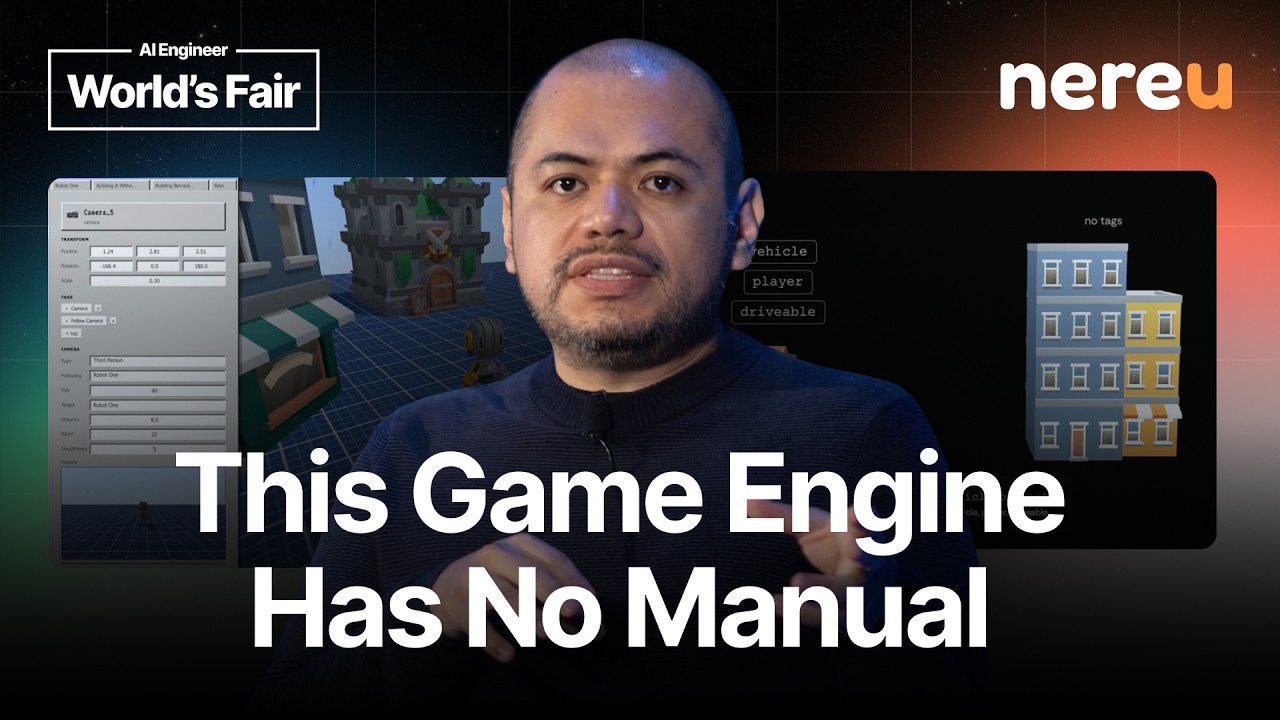
The Next Game Engine Won't Have a Manual — Arturo Nunez, Nereu
Aug 18, 2026 · 19:33
Arturo Nunez, creator of the AI-assisted game engine Nereu, argues the next game engine won't have a manual: instead of coding, users describe intent. Drawing on a decade at Unity, he built Nereu around an asset tag system (ATS) inspired by Entity Component System, where everything is an asset tagged with intent (e.g. character, animated, double jump) and systems query tags—so a building can be tagged drivable and dropped into a Mario Kart race. The assistant, Bibi, helps users get unstuck rather than one-shot finished games, and context is assembled using level of detail: assets near the edited object get full tag values, distant ones collapse to position and type, and hundreds of grass pieces are omitted. Nereu also uses vision models to tag 6,000–7,000 assets, runs in the browser with JavaScript, and is in closed alpha. Nunez contrasts this with world models, which he says remain far from real-time 4K 60 fps games.
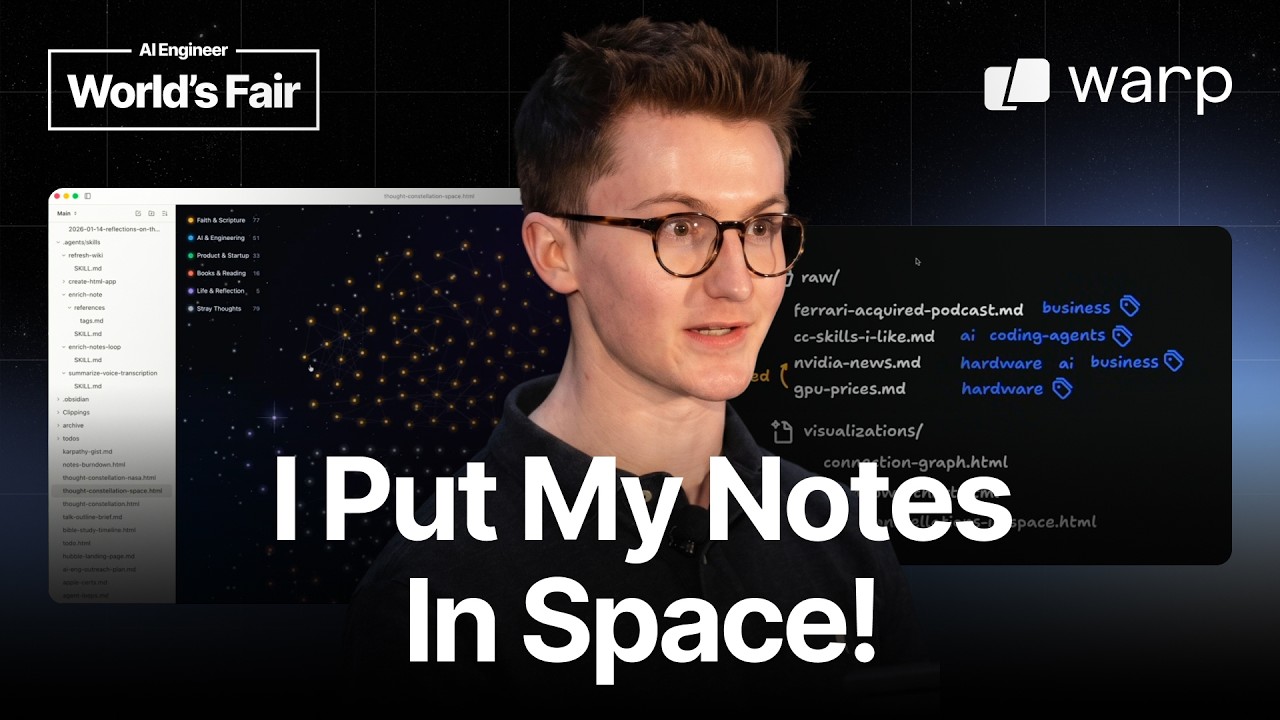
LLM Knowledge Bases: a practical guide — Ben Holmes, Warp
Aug 12, 2026 · 21:17
Ben Holmes, Developer Relations Lead at Warp, demonstrates how to turn a disorganized folder of voice-dictated notes into a browsable, interconnected knowledge base using LLM agents. He argues that voice dictation at 200 words per minute is the fastest capture method, recommending local tools like Handy and Voice Ink to avoid subscriptions. Holmes explains his 'enrich note' skill, which timestamps files, assigns tags from a fixed list to prevent Claude from inventing new ones, researches sources via web search, and adds backlinks through key term search. He then shows how to generate wikis from a Karpathy gist, grouping people, concepts, and organizations, and automates the entire pipeline on a daily schedule using Obsidian's headless CLI in a cloud sandbox via Oz.dev. Finally, he demonstrates asking an agent to build an HTML and Tailwind graph view of all notes, revealing clusters of interests and gaps in thinking.

HTML Is All Agents Need — James Russo, HeyGen
Jul 21, 2026 · 15:13
James Russo, software engineer at HeyGen, argues that HTML, CSS, and JavaScript are the native languages of LLMs and all agents need to create great videos—leading to HyperFrames, an open-source framework that turns agent-authored HTML into deterministic MP4s. By letting the small Gemini 3 Flash model author code first, they ensured the thinnest wrapper won, with only a few data attributes for timing. Rendering works by freezing the browser clock and seeking frame by frame, ensuring everything loads before capturing each frame—enabling deterministic video from any web technology (Three.js, WebGL, Lottie). HyperFrames skills focus on taste and video craft rather than teaching frameworks, raising the floor for single-shot output. The framework has already rendered over 1.3 million videos in 90 days from 267,000 creators, with 15,000 daily renders and 32,000 GitHub stars—proving the approach at scale.

Content Is Code - Matt Palmer, Conductor
Jul 18, 2026 · 10:53
Matt Palmer, head of developer experience at Conductor, argues that code is now the fastest way to produce technical content, shifting left to code as the source of truth. He outlines three eras of content creation—handcrafted, expensive code, and cheap code with AI—and claims that the scarce resource today is not code but structure and conscientiousness, meaning meticulous care in maintaining design tokens, brand guidelines, and clean codebases. AI rewards organizational excellence over raw technical skill, making the best communicating teams those that instill discipline and rigor into their software creation. Palmer predicts 2026 as the year of the creative technologist and 2027 as the year of the content engineer, with declarative pipelines that automatically generate documentation, walkthroughs, product tours, and updates from structured code.
Powered by PodHood