
Automated AI Research
Episodes from AI Engineer about Automated AI Research.
2 episodes
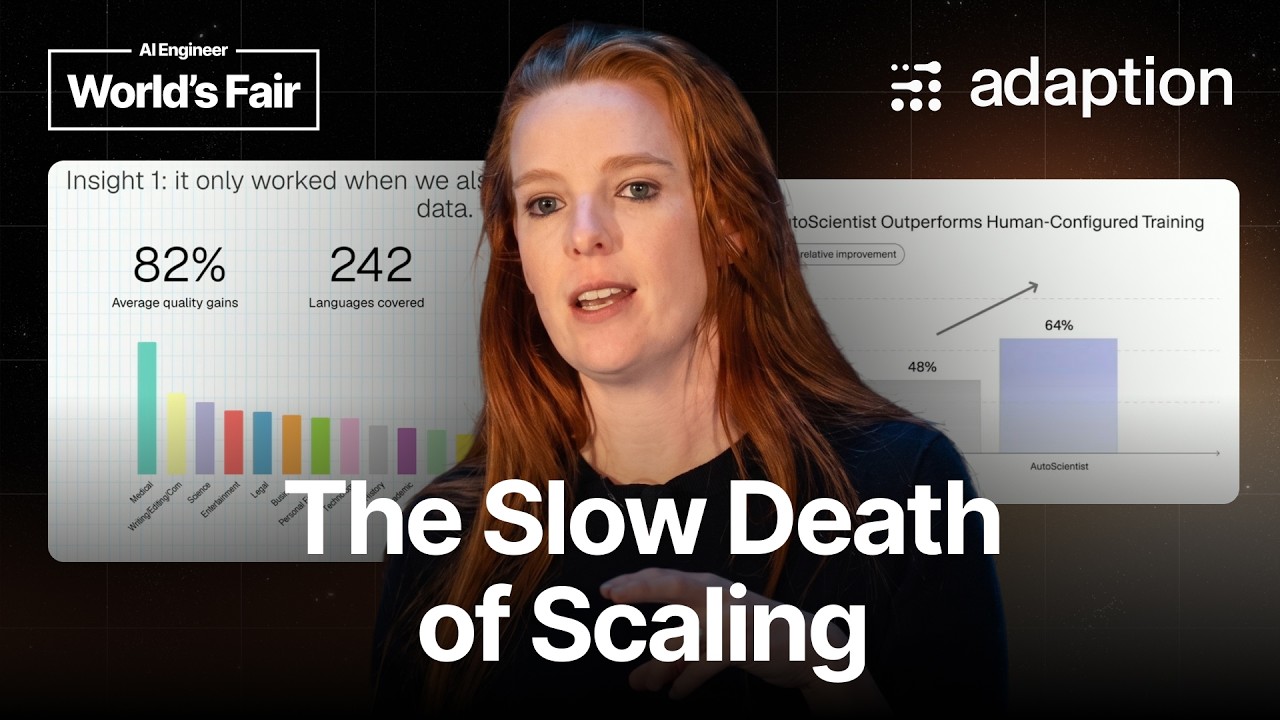
Adaption Labs: Gradient-Free Continual Learning — Sara Hooker, Adaption
Aug 12, 2026 · 20:51
Sara Hooker of Adaption Labs argues that the frontier of AI discovery is about to widen, moving beyond the 'unreasonably narrow path' of elite PhDs and industry labs. She introduces AutoScientist, which automates model training by co-optimizing data and model, outperforming research staff and achieving win rates above 60% (a budget cap since removed). Hooker also presents the 'slow death of scaling,' claiming pretraining size is no longer the most lucrative axis, as smaller models now outperform larger ones on the OpenLLM leaderboard. This shift makes compute more distributable, enabling more people to contribute to frontier AI. She addresses safety concerns, distillation dependencies, and offers free GPU access to AutoScientist beta users.
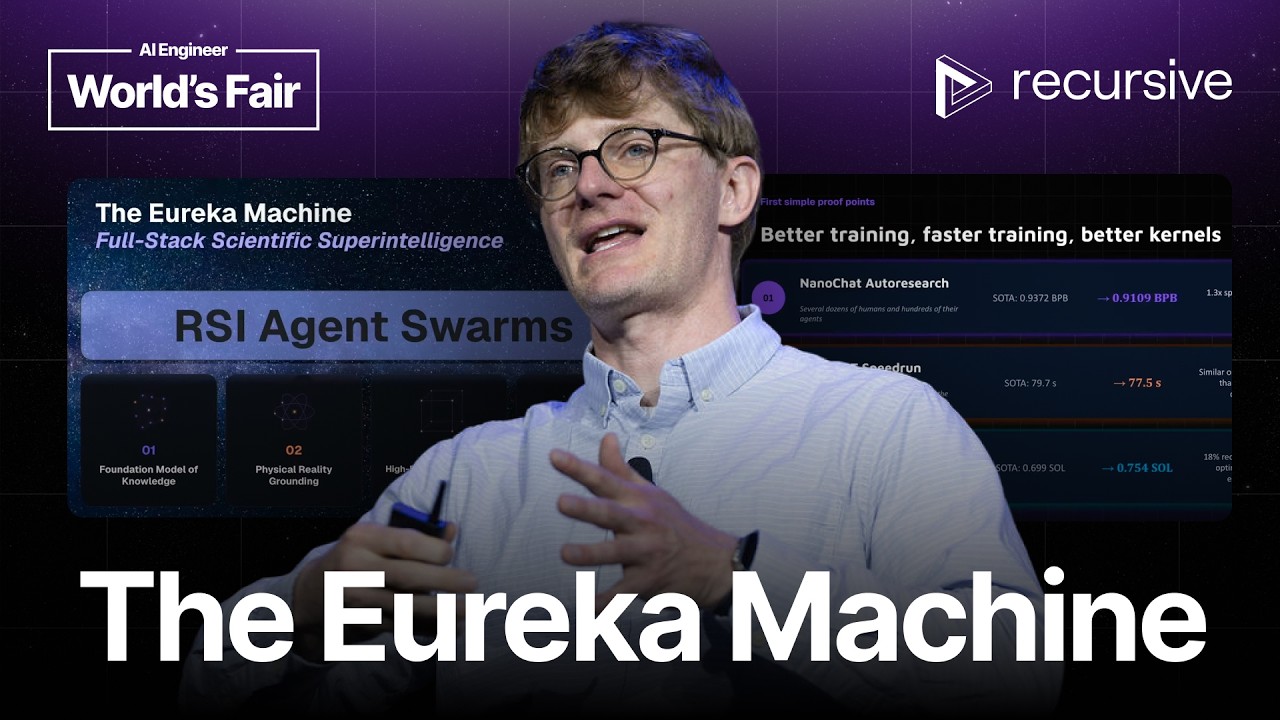
First Steps Toward Automated AI Research — Richard Socher, CEO Recursive AI
Jul 30, 2026 · 20:24
Richard Socher, CEO of Recursive AI, presents his vision of a "Eureka machine" that automates scientific discovery through recursive self-improvement, arguing that automating research can compress centuries of progress into decades. He frames science as an evolutionary process driven by Popperian falsification, and proposes a four-pillar system covering existing knowledge, measurement, simulation, and physical experimentation. Socher shows early proof points from his lab: a NanoChat model improved from 0.93 to 0.91 bits per byte, a NanoGPT speedrun cut by over two seconds to 70 seconds, and CUDA kernels that beat NVIDIA's benchmark leaderboard across all categories. He emphasizes that while these are early wins, the direction points toward fully autonomous AI research that could ultimately tackle problems in medicine, economics, and astrophysics.
Powered by PodHood