
SQL
ProductA product discussed on AI Engineer.
3 episodes
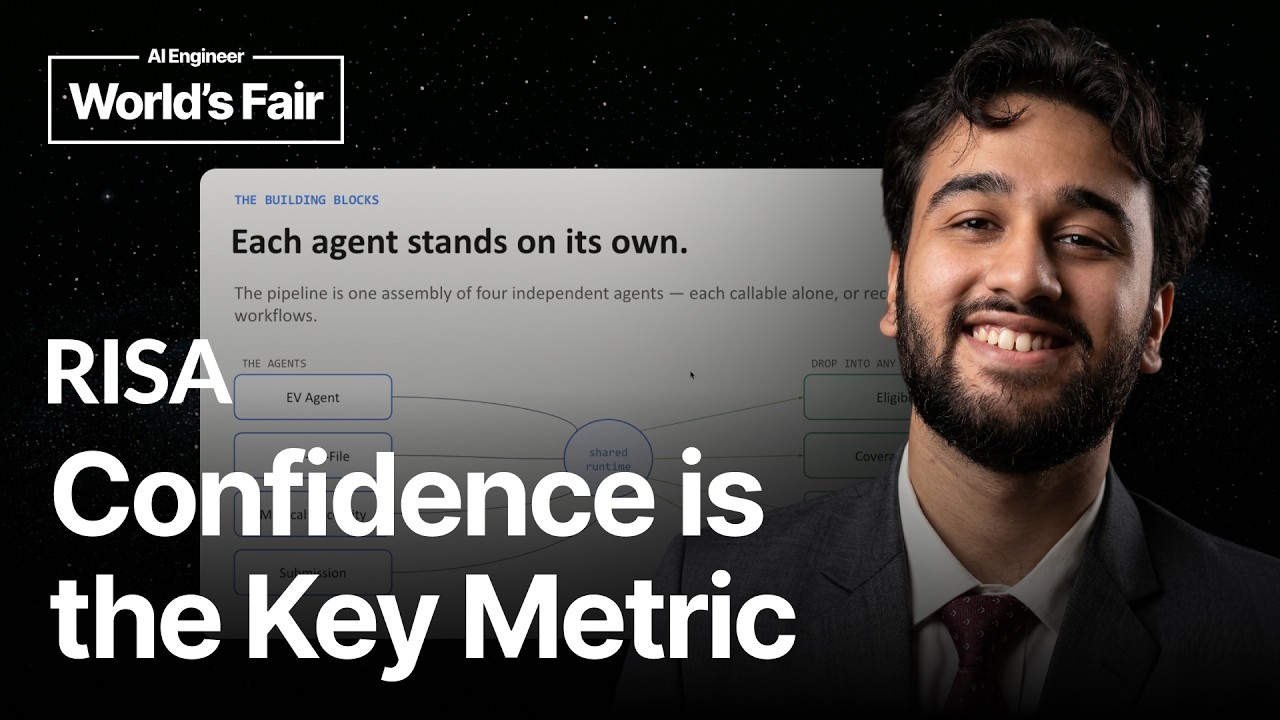
Can Oncology Workflows Run Without Human Touch? - Anant Shankhdhar, Risa Labs
Jul 20, 2026 · 16:41
Anant Shankhdhar, an AI engineer at Risa, explains how his team automates oncology workflows end-to-end using four AI agents—EV, Auth, Necessity, and Submission—to eliminate human touch in prior authorization processes. The EV Agent handles eligibility and benefits verification via a unified service that connects to payer APIs and RPA portals, using LLM-driven config generation and self-healing loops to scale. The Auth Agent determines drug authorization status by reconciling evidence from patient notes, authorization letters, and a payer rule knowledge base, enabling no-touch handling for drugs that are already authorized or don't require authorization. The Medical Necessity Agent answers clinical questions per patient, attaching confidence scores and escalating only cases needing human review. The Submission Agent submits orders to payers using customized integrations. Risa's agents are deployed across 20+ hospitals, supporting care for over 100,000 patients, and the no-touch share…
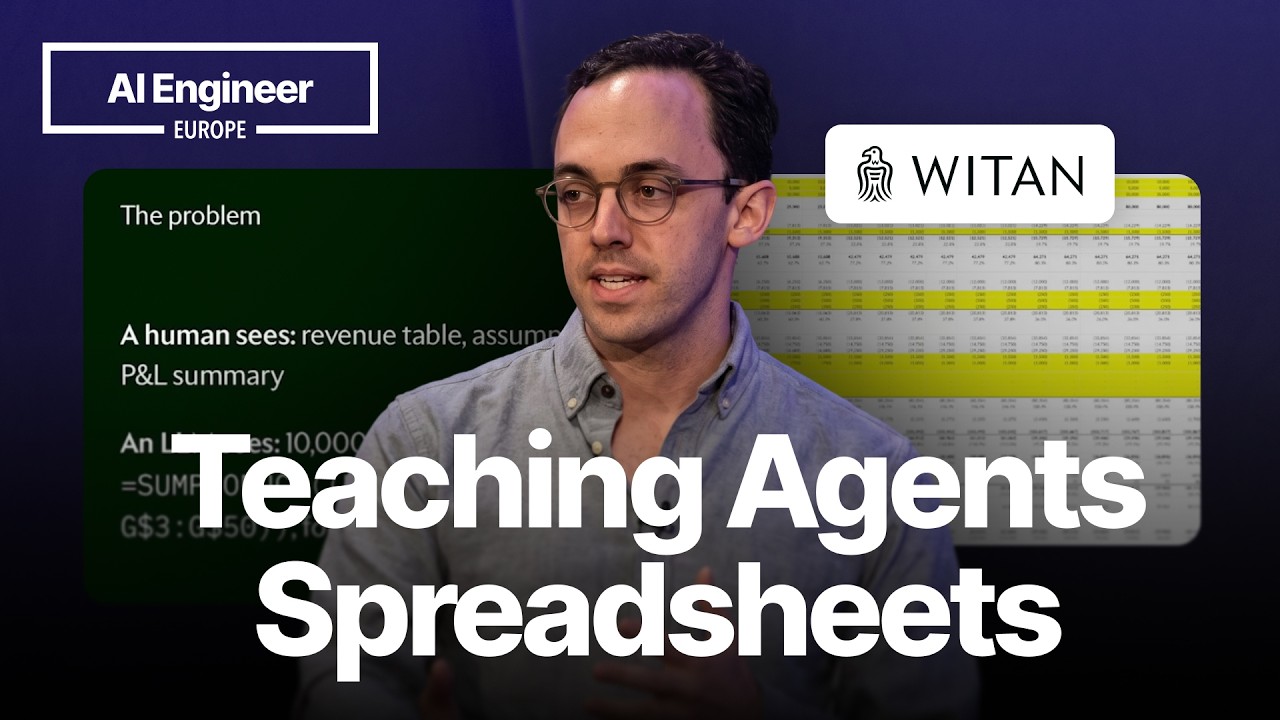
Teaching Coding Agents to do Spreadsheets - Nuno Campos, Witan Labs
Jul 8, 2026 · 19:09
Nuno Campos from Witan Labs explains how his team spent four months teaching coding agents to master spreadsheets, raising accuracy from 50% to 92% on a financial analysis benchmark. Key failures included a rigid three-agent architecture and standalone representations like SQL and XML. The breakthrough was replacing 15 separate tools with a single JavaScript repo tool offering persistent state and code-mode semantics, enabling agents to combine multiple operations in one call and drastically reduce timeouts. The team built high-fidelity formula and rendering engines to close the verification loop, and added domain knowledge prompts to focus the model. For evaluation, they moved from LLM-as-judge to deterministic comparisons using golden spreadsheets. Campos urges practitioners to replace many tool calls with real scripting languages, invest in feedback loops, and regularly revisit interfaces as model capabilities evolve.

Tool Calling Is Not Just Plumbing for AI Agents — Roy Derks
Feb 22, 2025 · 25:18
Roy Derks argues that tool calling is the most critical yet overlooked component of AI agents, far more than mere 'plumbing.' He contrasts traditional tool calling—where developers manually manage callbacks, retries, and errors within the agent loop—with embedded tool calling, a black-box approach used by frameworks like LangChain’s createReactAgent. Derks advocates for separation of concerns via the Model Context Protocol (MCP) from Anthropic, which splits tool logic into MCP servers communicating with clients, and via standalone tool platforms such as IBM’s wxflows, Composio, and Toolhouse that let teams build tools once and reuse them across LangChain, CrewAI, or AutoGen. He also introduces dynamic tools, where an agent generates queries on the fly—e.g., using GraphQL or SQL schemas—instead of defining hundreds of static tools, noting that LLMs like Claude handle GraphQL well but may hallucinate on deeply nested schemas. The episode emphasizes that 'an agent is only as good as its tools' and provides practical guidance on designing tool descriptions (which act like system prompts) and output schemas to enable type-safe, chainable tool calls.
Powered by PodHood