
OpenAI Agents SDK
ProductA product discussed on AI Engineer.
4 episodes
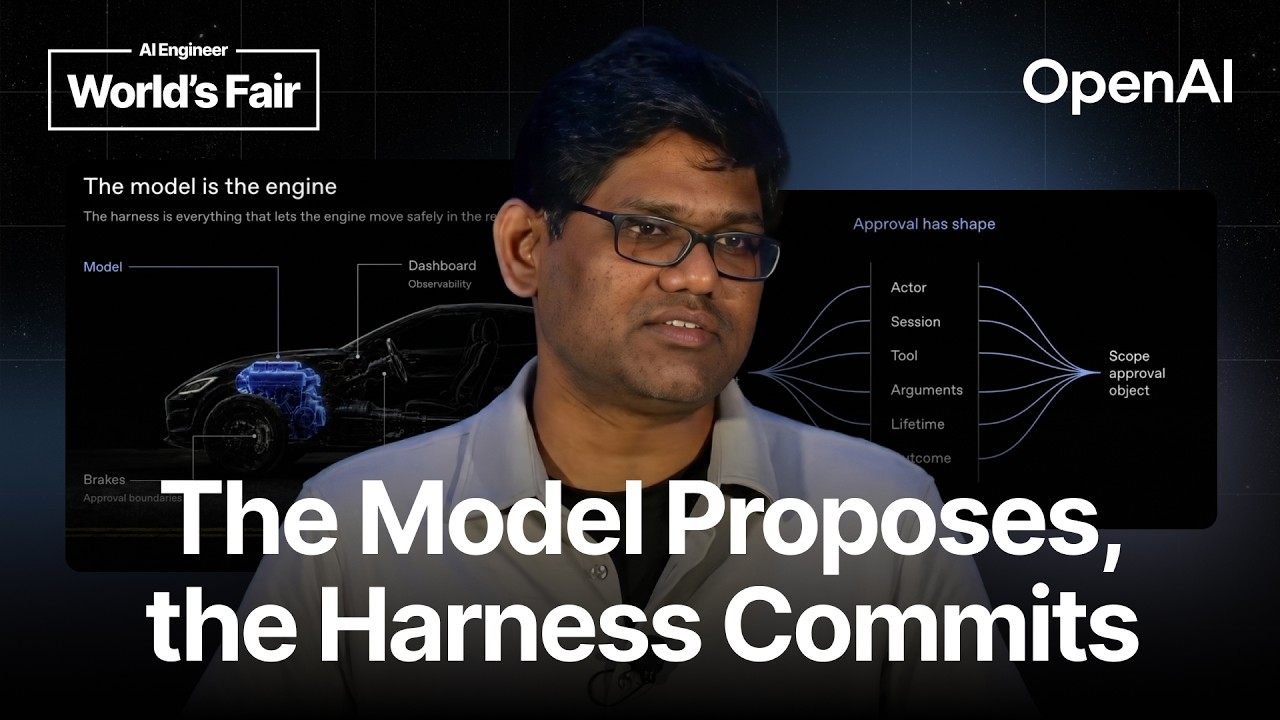
The Model Was Right. The Harness Failed. — Vinoth Govindarajan, OpenAI
Jul 29, 2026 · 18:26
Vinoth Govindarajan of OpenAI argues that most agent failures are harness failures, not model failures. Using OpenClaw as a case study, he details five failure shapes: state hole (delivered but not remembered), overlapping writers (last write silently erases previous), dangling tool call (run waits for an event that never arrives), approval drift (expired approval blocks later work), and missing edge proof (internal success but user didn't see result). The through line: a model proposes, the harness commits, and the receipt proves it. He prescribes three invariants—own the state, order the mutation, prove the action—and a five-question run receipt audit: what woke it up, what state did it inherit, what authority did it use, what executed, and what evidence survived.
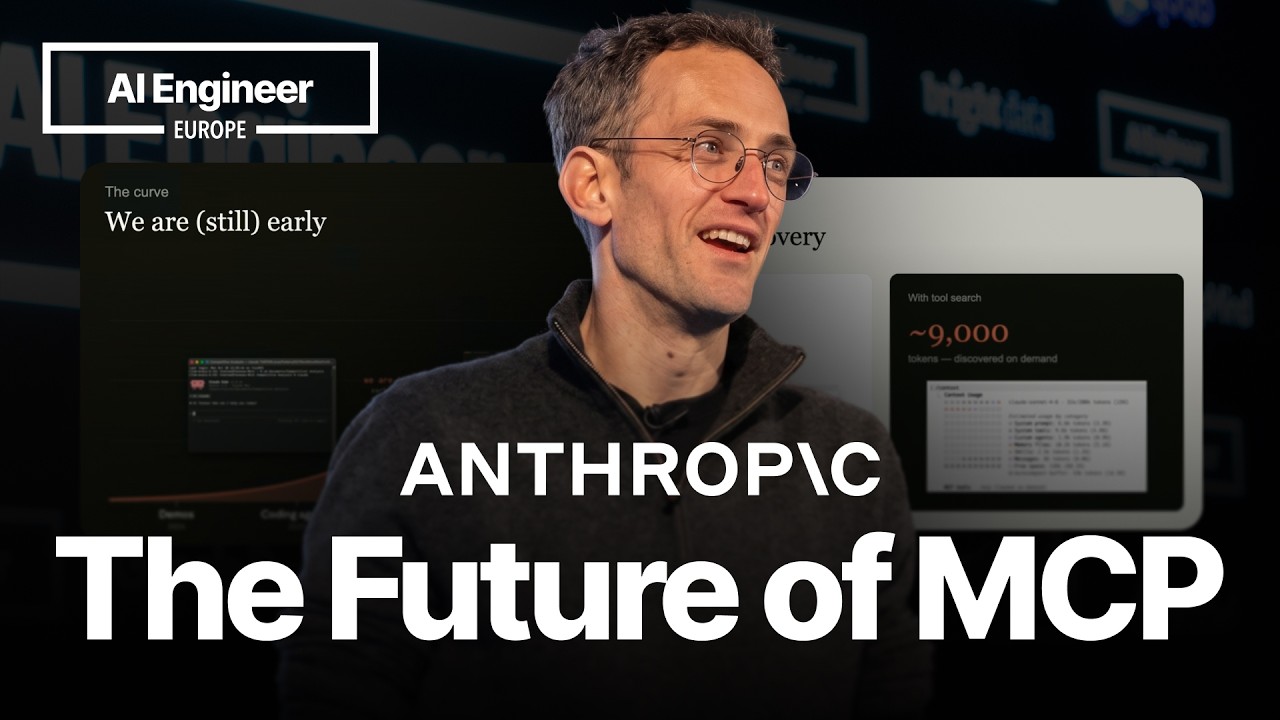
The Future of MCP — David Soria Parra, Anthropic
Apr 19, 2026 · 18:46
David Soria Parra from Anthropic argues that MCP (Model Context Protocol) is the key to connecting agents to tools and data in production, with 110 million monthly downloads—outpacing React's growth at the same stage. He lays out a 2026 connectivity stack combining Skills, MCP, and CLI/Computer Use, each suited for different needs, and emphasizes that best agents will use all three seamlessly. To improve client harnesses, he introduces Progressive Discovery—deferring tool loading via Tool Search to reduce context usage—and Programmatic Tool Calling, where models write scripts to compose tool outputs efficiently. Upcoming MCP protocol improvements include stateless transport (with Google) for easier scaling, async agent-to-agent tasks, enterprise features like Cross App Access and Server Discovery via well-known URLs, and a Skills-over-MCP extension for shipping usage instructions with servers. He calls for community feedback on these directions.
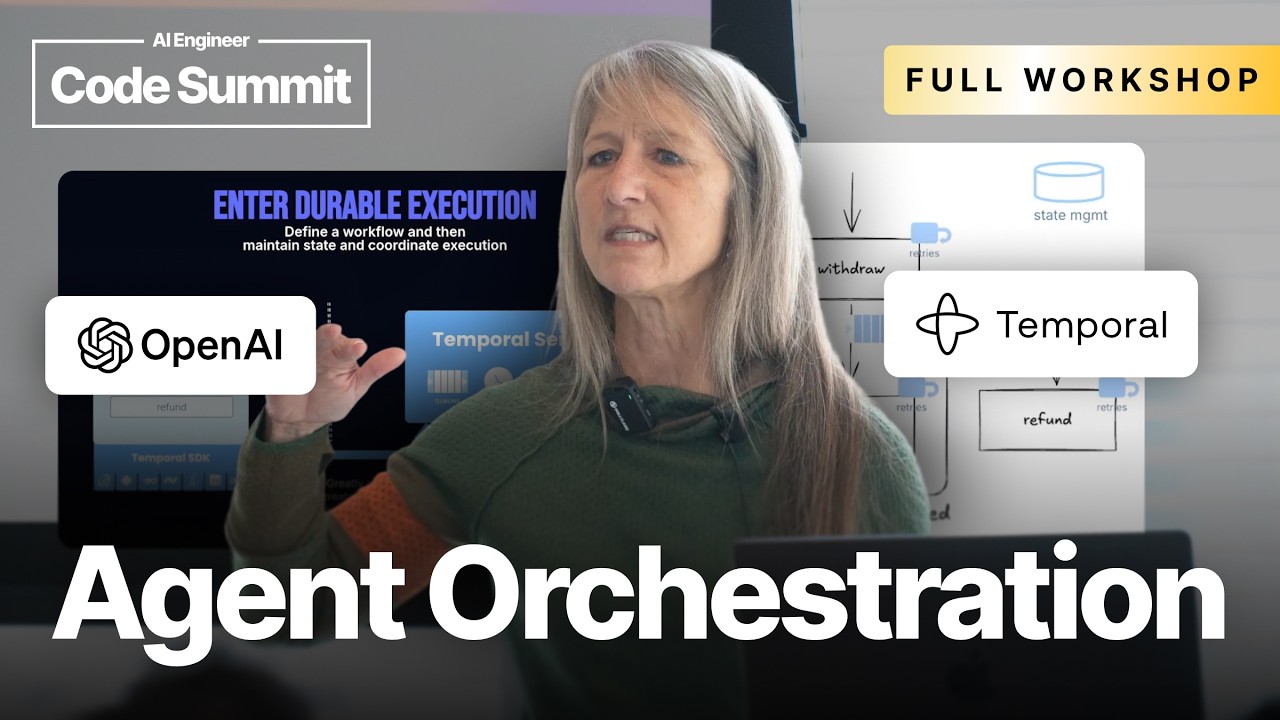
OpenAI + @Temporalio : Building Durable, Production Ready Agents - Cornelia Davis, Temporal
Jan 12, 2026 · 1:18:30
Cornelia Davis, developer advocate at Temporal, demonstrates how the OpenAI Agents SDK and Temporal combine to build durable, production-ready AI agents. The integration, co-developed by OpenAI and Temporal, wraps agentic loops in Temporal workflows, providing automatic retries, event sourcing, and state management that survive process crashes and network failures. A live demo shows a weather alert agent that calls an LLM, invokes tools like get_weather_alerts and get_ip_address, and recovers seamlessly after the worker is killed. Davis highlights that Temporal’s architecture treats processes as logical entities, allowing agents to run for days and handle human-in-the-loop delays without developer-managed infrastructure. She also explains handoffs and micro-agent orchestration, and points to the AI Cookbook on docs.temporal.io with ready-to-run recipes including the OpenAI Agents SDK integration.

The Demo I Wish I'd Had: OpenAI's Agents SDK... serverless! - Brook Riggio
Jun 3, 2025 · 17:51
Brook Riggio demonstrates deploying AI agent workflows on Vercel's serverless platform using OpenAI's Agents SDK and Inngest orchestration. He presents a reference architecture: Next.js frontend triggers Inngest events that invoke Python agents on Vercel serverless functions, with automatic retries and step-level observability. His demo builds a newsletter generator: users enter topics, a research agent scans news, a formatting agent structures the content, and results save to Vercel blob storage while the frontend polls for completion. He highlights that Vercel automatically detects Python functions without a config file, and Inngest's step.run ensures reliable execution within serverless time limits. The talk emphasizes cost efficiency (pay only for actual execution), full type safety via Pydantic and TypeScript, and easy integration of long-running agent tasks. The open-source repo is available for fork and contributions.
Powered by PodHood