
Open Code
ProductA product discussed on AI Engineer.
3 episodes
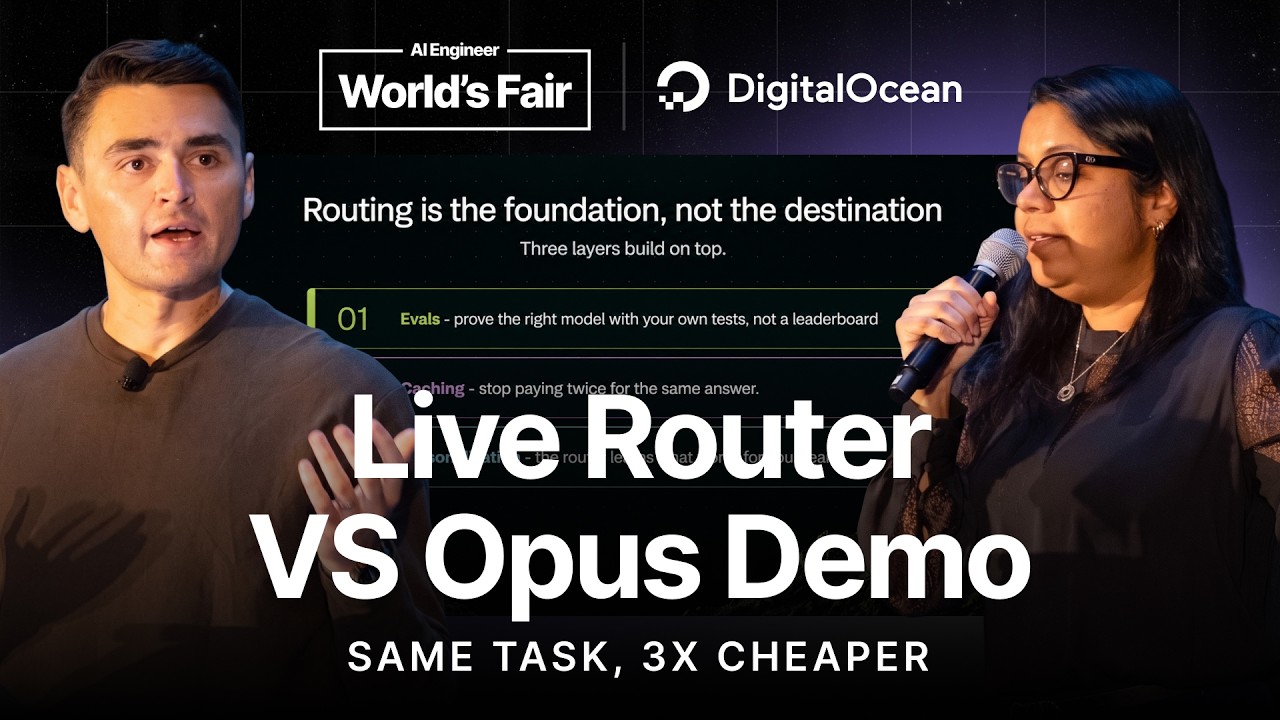
Preferences Over Benchmarks: Model Routing — Archana Kamath & Tyler Gillam, DigitalOcean
Aug 22, 2026 · 15:54
DigitalOcean's Archana Kamath and Tyler Gillam argue that no single best AI model exists, so choosing models by benchmark leaderboards is the wrong instinct; the right model depends on the request's task, cost, latency, system prompts, and end-user preferences. They demo their open-source inference router, built into DigitalOcean's AI-native cloud, which uses a purpose-built mixture-of-experts model to decide in under 200 milliseconds, costs nothing extra, and needs no code changes. In a live coding-agent comparison, the router matched premium quality while spending 14 cents versus 44 cents over a session and scored 90% correctness versus Opus's 95% with fewer tokens and faster speed. They frame routing as a foundation layer for evals, caching, and personalization, with no vendor lock-in.

The Golden Age of AI Engineering — Alexander Embiricos & Romain Huet & Peter Steinberger, OpenAI
Jul 9, 2026 · 25:13
OpenAI's Alexander Embiricos, Romain Huet, and Peter Steinberger reveal how AI engineering is entering its golden age, with model releases accelerating from every 15 months to roughly every 6 weeks and frontier-level intelligence now available at $1 per million input tokens and $6 per million output tokens. They demonstrate Codex's evolution from a model that couldn't test its own code to one generating 750 tokens per second, enabling a 10-second pull request, and emphasize that the product is built on the same open-source stack—responses API, AGENTS.md format, and harness—that ships to developers. The trio argue that the future is not about automating engineers but empowering them via value maxing over token maxing, with agents moving from local/cloud distinctions to persistent, long-running managers that orchestrate work and only require human steering at key decision points, as illustrated by an automated open-source issue resolution workflow.
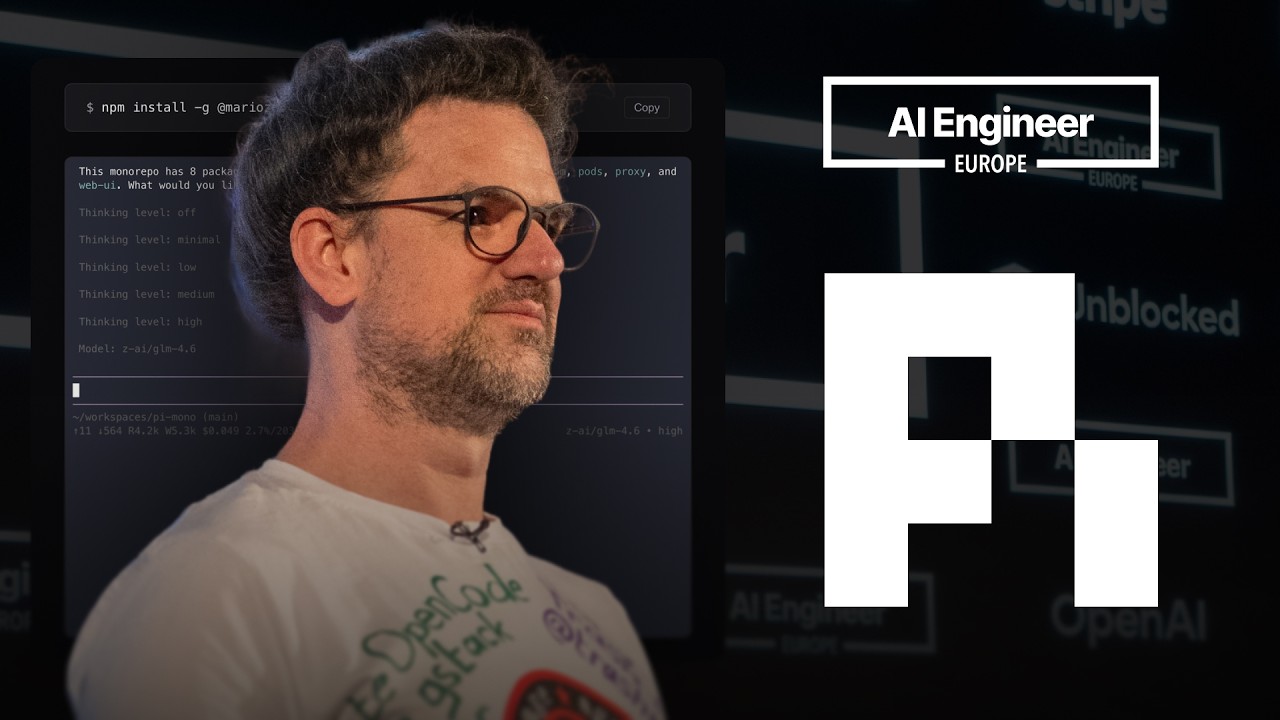
Building pi in a World of Slop — Mario Zechner
Apr 16, 2026 · 18:25
Mario Zechner explains why he built pi, a self-modifying, extensible agent core, after growing frustrated with Cloud Code and Open Code for their buggy features, uncontrolled context management, and zero extensibility. pi strips away complexity, giving the agent just four tools (read, write, edit, bash) and a minimal system prompt, letting it adapt to the user's workflow rather than vice versa. Extensions are TypeScript modules that hot-reload, enabling users to build custom tools, chat rooms, or even play Doom without forking pi. He then attacks clankers — agent-generated pull requests and issues — that are destroying open source, sharing his own tactics like auto-closing PRs with a human-voice request and de-prioritizing OpenClaw interactions. In Act 3, Zechner argues that agents compound errors with zero learning, producing enterprise-grade complexity in weeks, and that long context windows and agentic search are hacks. His prescription: scope agent tasks, modularize codebases, cap generated code review, and always read every line of critical code yourself.
Powered by PodHood