
Nemotron
ProductA product discussed on AI Engineer.
5 episodes
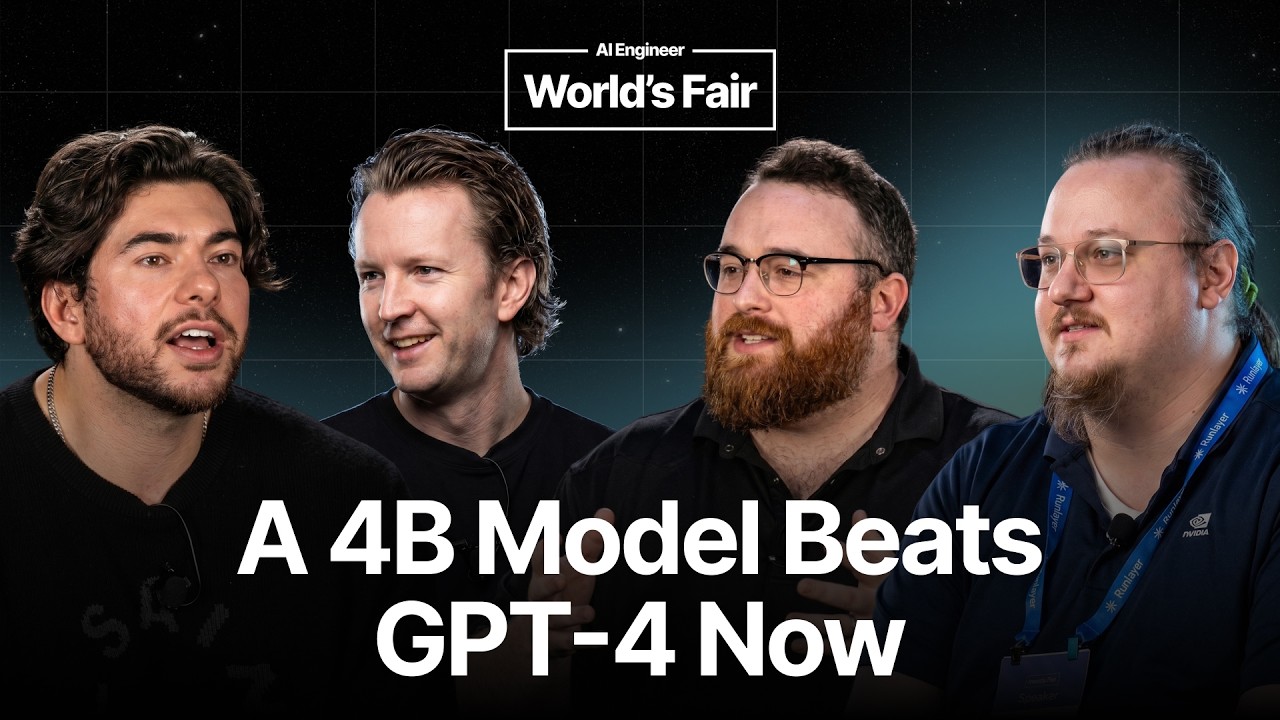
Local Models: Trust, Control, Optimization — Carter Abdallah, NVIDIA
Aug 7, 2026 · 43:21
NVIDIA's Carter Abdallah, Prime Intellect's Vincent Weisser, Arcee's Lucas Atkins, and NVIDIA's Chris Alexiuk argue open-weight models are the trustworthy foundation for enterprise and local AI. Atkins separates trust from safety: when Anthropic pulled Fable, enterprises chose Chinese open models for guaranteed availability, and open models are inspectable unlike closed APIs. Arcee pretrained a 400B model in six months; Weisser cites a customer that specialized an open model for finance in a week or two, beating Opus at a fraction of Haiku's cost. Alexiuk calls open weights the fix for 'mismanaged genius' and expects capable local models on MacBooks within a year; the panel predicts Fable-level open models within a year and hopes local-model use rises from a rounding error to 10–15%.

The State of Model Routing — NVIDIA, Cognition, OpenRouter
Aug 6, 2026 · 48:17
Cognition's Walden Yan, OpenRouter's Alex Atallah, NVIDIA's Tanay Varshney and Carter Abdallah argue routing should orchestrate frontier and cheaper models, not per-task benchmark picks; Devin Fusion cuts Fable-level intelligence cost by 40%. Yan: task-type routing is fragile because a session shifts from codebase question to feature request to live debugging; Devin keeps a frontier model planning while a cheap sidekick executes. Atallah: OpenRouter's auto router sat unused for two years until OpenClaw heartbeats every ten minutes created an app with two intelligence needs; out-of-distribution, small models thrash: Opus scores three times better at a tenth of Haiku's cost on terminal bench. Varshney cites jagged capabilities for up to 10% higher accuracy; Abdallah adds local/cloud routing.

Designing Voice Agents for Real Conversations - Chintan Agrawal & Daniel Wirjo, AWS
Jul 20, 2026 · 32:57
AWS Solutions Architects Chintan Agrawal and Daniel Wirjo argue that the hardest problem in production voice agents is audio engineering—not AI—specifically turn-taking, the decision of when an agent should stop speaking or start responding. They present three levels of turn detection: Level 1 uses Silero VAD with a silence timeout (e.g., 300ms default), Level 2 delegates to STT providers like Cartesia or Deepgram for built-in endpointing (p50 ~250-300ms), and Level 3 combines Silero VAD with SmartTurn, an open-source 8MB model achieving 58.9% recall and 68.4% precision while falling back to VAD on low confidence. They show how interruption handling (barge-in) flushes TTS/LLM in ~15ms and distinguish real interruptions from backchannel acknowledgments. Latency budgets are tight: 40ms mic encoding, 52ms network/jitter, 300ms STT+endpointing, 500-650ms LLM time-to-first-byte (dominant bottleneck), and 120-190ms TTS playback, totaling 800-1300ms in standard cloud setups. Co-locating models in one GPU cluster can achieve ~500ms voice-to-voice. For LLMs, Nemotron 3 Ultra and GPT-4.1 achieve ~530ms p50 but GPT-4.1 spikes to 1.7s p95, and multi-turn drift (>15 turns) can break prompt…
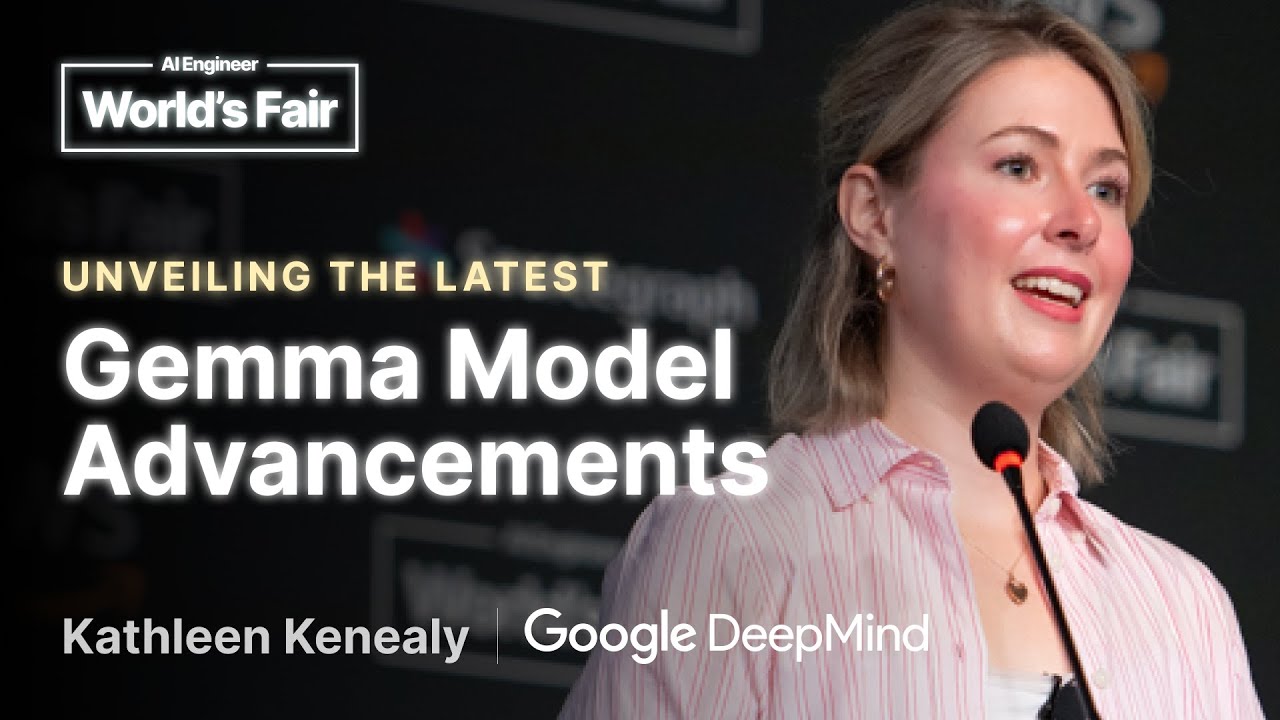
Unveiling the latest Gemma model advancements: Kathleen Kenealy
Feb 9, 2025 · 16:25
Kathleen Kenealy, technical lead of the Gemma team at Google DeepMind, unveils the latest advances in the Gemma model family, including the launch of Gemma 2 in 9B and 27B parameter sizes, which outperform models two to three times larger, such as LLaMA 3 70B. She also introduces PALI Gemma, a multimodal model combining Siglip Vision Encoder with Gemma 1.0 for image-text tasks. The episode highlights Gemma's responsible-by-design approach, broad framework support (TensorFlow, Jax, PyTorch, etc.), and the release of the Gemma cookbook with 20 recipes. Kenealy emphasizes that Gemma 2 is optimized for easy integration and fine-tuning, available on Google AI Studio, and invites the community to build and share their projects.
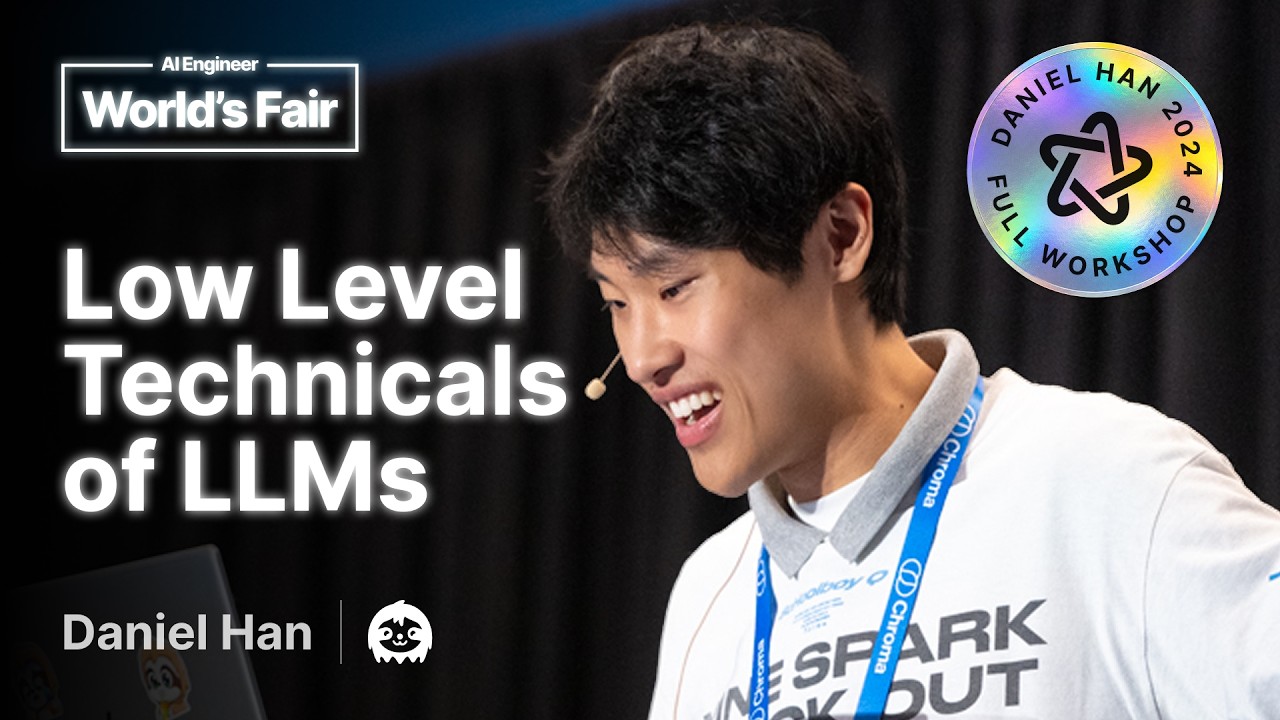
Low Level Technicals of LLMs: Daniel Han
Jul 31, 2024 · 2:52:26
Daniel Han of Unsloth explains how to find and fix bugs in open-source LLMs like Gemma, Phi-3, and Llama, covering tokenizer issues, architecture pitfalls, and finetuning optimizations. He details the eight Gemma bugs Unsloth fixed, including a critical RoPE downcasting error that broke positional encoding, and a 2048 sliding window bug in Phi-3. Han walks through transformer internals: attention masking, layer norms, RoPE embeddings, and SwiGLU activation, showing how to derive gradients for custom kernels. He demonstrates Unsloth's 2x faster finetuning with 70% less memory via Triton kernels, and introduces new features: automatic Ollama model file creation, CSV fine-tuning with merged columns, and chunked cross-entropy for large vocabularies. The session includes live Q&A on learning rate schedules, precision trade-offs, and mechanistic interpretability.
Powered by PodHood