
Hermes Agent
ProductA product discussed on AI Engineer.
5 episodes

Healthcare’s Agent Bytecode: X12 as the Harness for AI Agents — Vasant Kearney, Onlay
Aug 19, 2026 · 20:25
Vasant Kearney of Onlay argues that X12, the healthcare claims data standard, is the harness for AI agents: every step of the claim lifecycle—from eligibility (270) through acknowledgment (999) to payment (835)—has an X12 correspondence, and an agent calling a payer or driving a portal is emitting the same transaction by another route. He says phone, portal, and X12 surfaces are built by different teams and can all agree on the wrong answer, so no surface is ground truth; his system keeps a semi-correct internal X12 representation, correct only until downstream evidence says otherwise. Enterprise memory must live in a database rather than local disk, and swapping in a stronger model is not automatically better inside a system built around the old one—evals and validation must be redone. The goal is cutting insurance costs and improving patient experience, and that means being AI pilled but also AI skeptical.

CrabRAG: Why Automated Assistants Need Graph Memory, Not More Tokens — Stephen Chin, Neo4j
Jul 22, 2026 · 20:42
Stephen Chin of Neo4j introduces CrabRAG, a graph-based memory system that outperforms vector databases for AI agent reasoning. He demonstrates that markdown-based memory wastes over 100,000 tokens per round and that vector similarity fails at multi-hop questions. Using a home lab digital twin, he shows a graph agent correctly identifies his daughter's Minecraft server running outdated OS and exposed management ports, while the vector agent returns vague answers. Chin explains that graphs store relationships and enable precise, explainable, and auditable results, and that Claude can write Cypher queries for graph traversal. He announces his book 'GraphRAG: The Definitive Guide' and free training at Neo4j's Graph Academy.
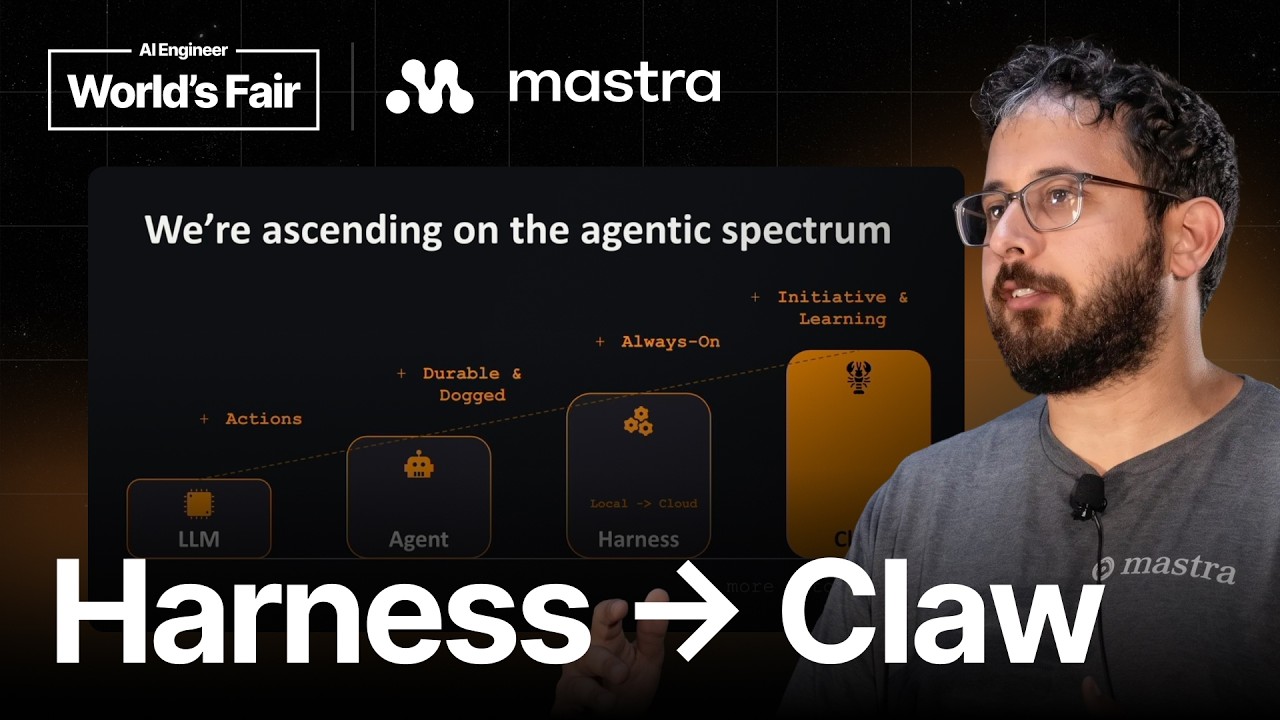
Every Harness Will Become A Claw — Sam Bhagwat, Mastra
Jul 21, 2026 · 15:36
Sam Bhagwat, founder/CEO of Mastra, argues that every developer harness will inevitably evolve into a 'claw'—an always-on, self-improving agent that takes initiative. He defines the journey from basic LLMs to agents, then to harnesses (durable, planning-capable tools like Claude Code), and finally to claws that add external event listening, heartbeat-driven wakeups, and continual learning via auto-skill generation. Drawing on Steinberger's law (a play on Zawinski's law), Bhagwat predicts a future shakeout where only a handful of claws survive, just as mobile platforms consolidated around a few apps. He urges builders to equip their agents with the full capability stack—durability, planning, parallel subagents, session persistence—to avoid being displaced in the coming consolidation.
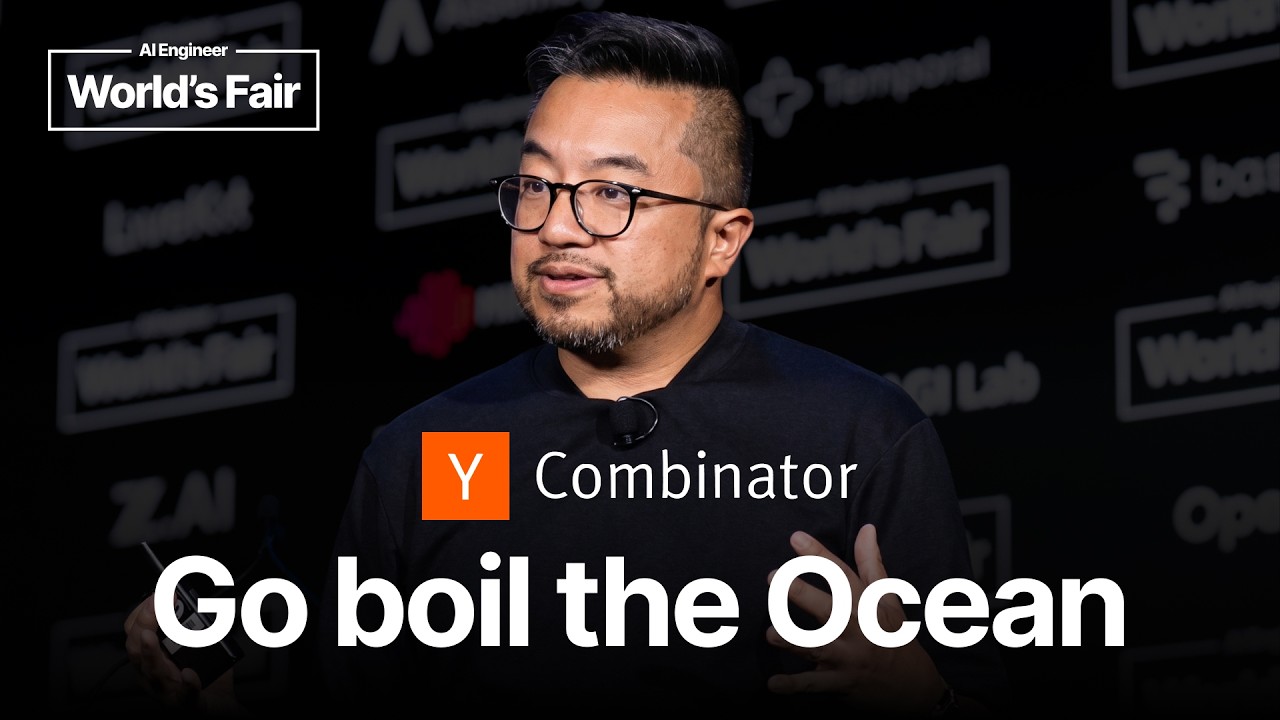
Every company should have a Brain — Garry Tan, Y Combinator
Jul 17, 2026 · 21:08
Y Combinator CEO Garry Tan argues founders must build AI-native companies that treat AI as a workforce, not auto-complete, to achieve 400x productivity. He details how skill files (Markdown documents) act as employees, a resolver table as an org chart, and a company brain (like his open-source GBrain) as the memory layer that selects the right context for each task. Tan cites YC's Winter '25 batch where 25% of companies had 95% AI-generated code, and portfolio companies Emergence and Retail reaching $15M ARR with 15 people and $60M with 40 respectively. His core message: never do one-off work—always "skillify" completed tasks into reusable skills, so the organization compounds knowledge daily rather than waking up with amnesia.
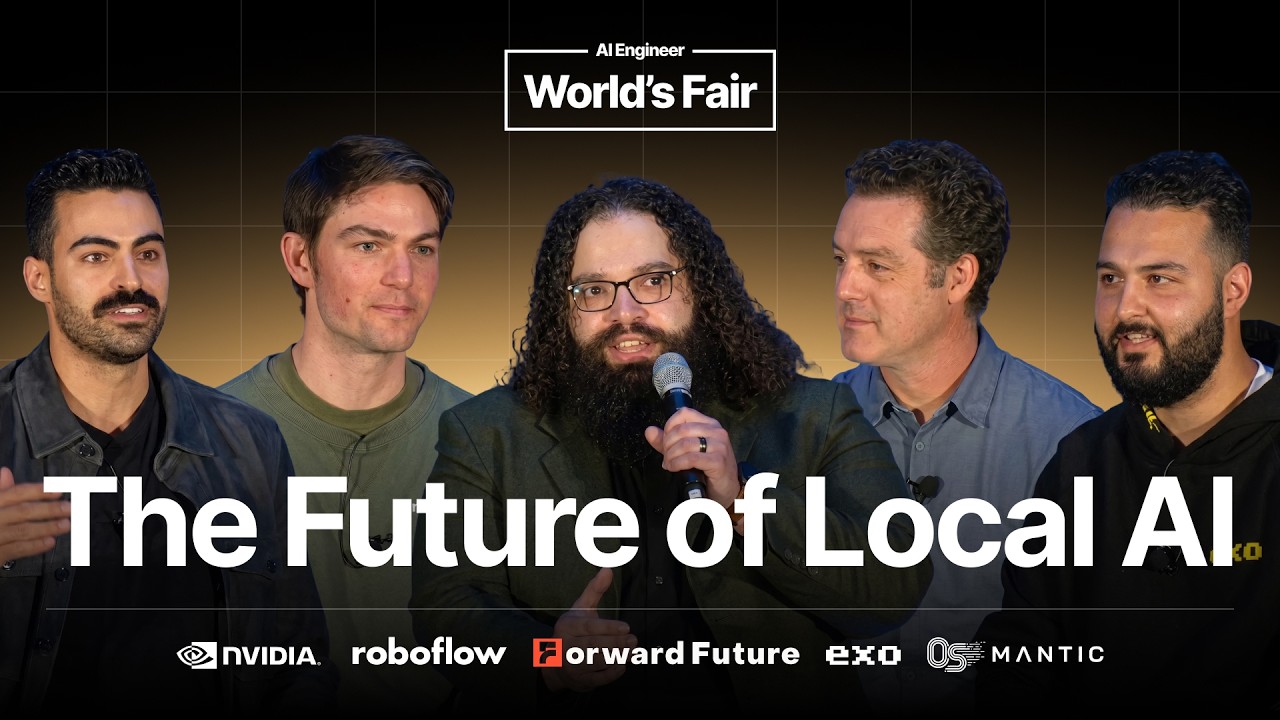
State of the Union: Why Local, Why Now — NVIDIA, Osmantic, Roboflow, EXO Labs, @matthew_berman
Jul 11, 2026 · 44:29
Nader Khalil (NVIDIA), Joseph Nelson (Roboflow), Alex Cheema (Exo Labs), Matthew Berman, and Ahmad Osman (Osmantic, r/LocalLLaMA) argue that local AI is now useful, driven by stronger open models and better hardware. They cite inflection points like Llama 2, DeepSeek v3, and GLM 5.2, which closed the gap with frontier cloud models. Sovereignty and control are key: enterprises need to choose their own model versions and avoid lock-in. Specialized models, such as Roboflow's fine-tuned vision models for deep-sea fish discovery, outperform general ones for specific tasks. Optimization is critical: EXO Labs achieved 10x performance on the DGX Spark by tuning existing NVIDIA kernels. The panel emphasizes that simplicity remains a barrier—most users need point-and-click solutions—and advocates for open-source AI to ensure freedom and innovation.
Powered by PodHood