
Helios
ProductA product discussed on AI Engineer.
2 episodes
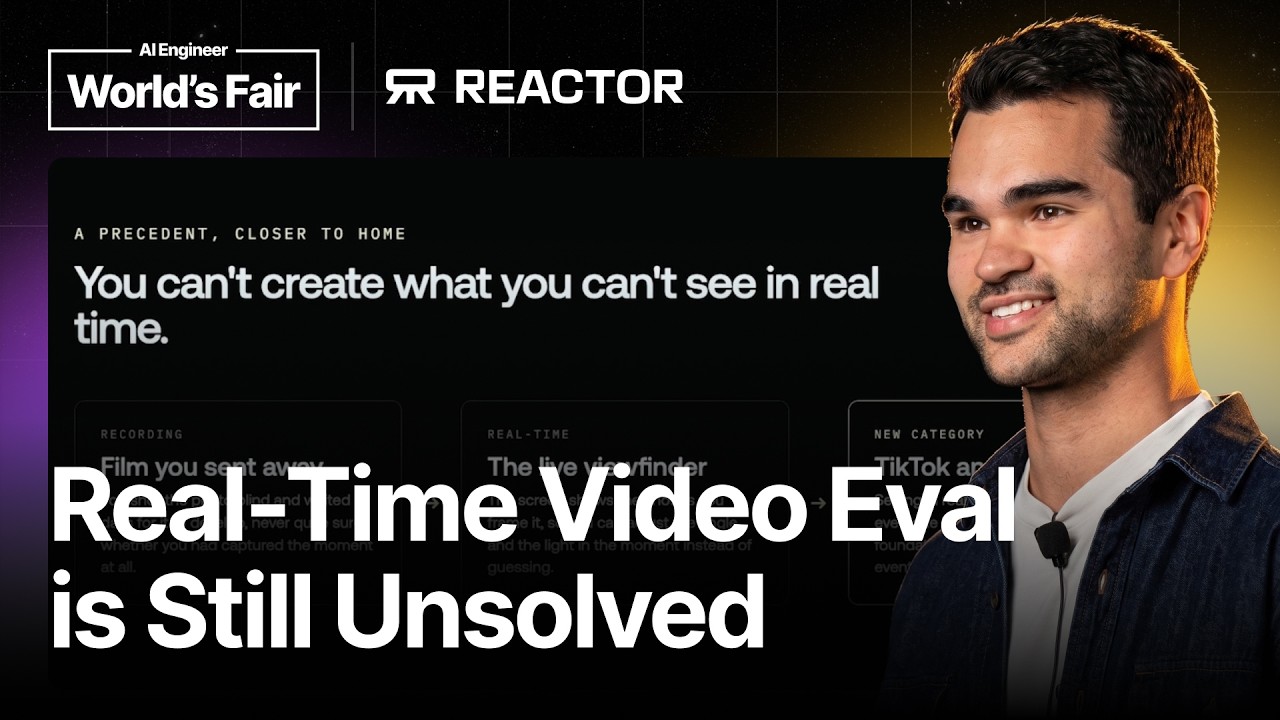
The Next Medium: Why Real-Time Interactive Video Changes Everything — Ahmed Ahres, Reactor
Aug 18, 2026 · 17:30
Ahmed Ahres, head of go-to-market at Reactor, argues that world models are real-time interactive video, a change of medium rather than a speedup, because video becomes programmable like software. GPS enabling Uber and viewfinders enabling Instagram and TikTok show how real time unlocks new applications. Reactor's platform serves infinite interactive video (Helios from ByteDance), controllable worlds (Lingbot from Alibaba, LongLive 2 from Nvidia), and live avatars he admits are still uncracked. Users build interactive live streams, medical and cooking simulations, and video-to-video editing. Real-time infrastructure means streaming pixels, live sessions with memory, and sub-100-millisecond latency; he offers promo code AIE2026 for $75 credits.

Generative Video at the Speed of Light — Keegan McCallum, uRun
Aug 18, 2026 · 8:43
Keegan McCallum, founder of inference provider uRun, argues that generative video's interesting axis is no longer quality but efficiency and long-horizon generation. He shows Helios, a distillation of Wan 2.1 14b, generating clips in real time for ~one-hundredth the cost of a slower frontier-quality clip, and notes at least 40 real-time/long-horizon models released this year. Ten dollars buys three hours of continuous generative video, and fifty buys fifteen; this unlocks magic-mirror webcam transformations, visual mediums for people who don't think in text, and content creation where you steer a generation in under a second. The hard part is serving: global GPUs, WebRTC with ICE/TURN, and synchronized streaming pipelines; uRun is building a React component, Python runtime, and MCP/CLI.
Powered by PodHood