
Lucas
GuestGuest on AI Engineer.
3 episodes
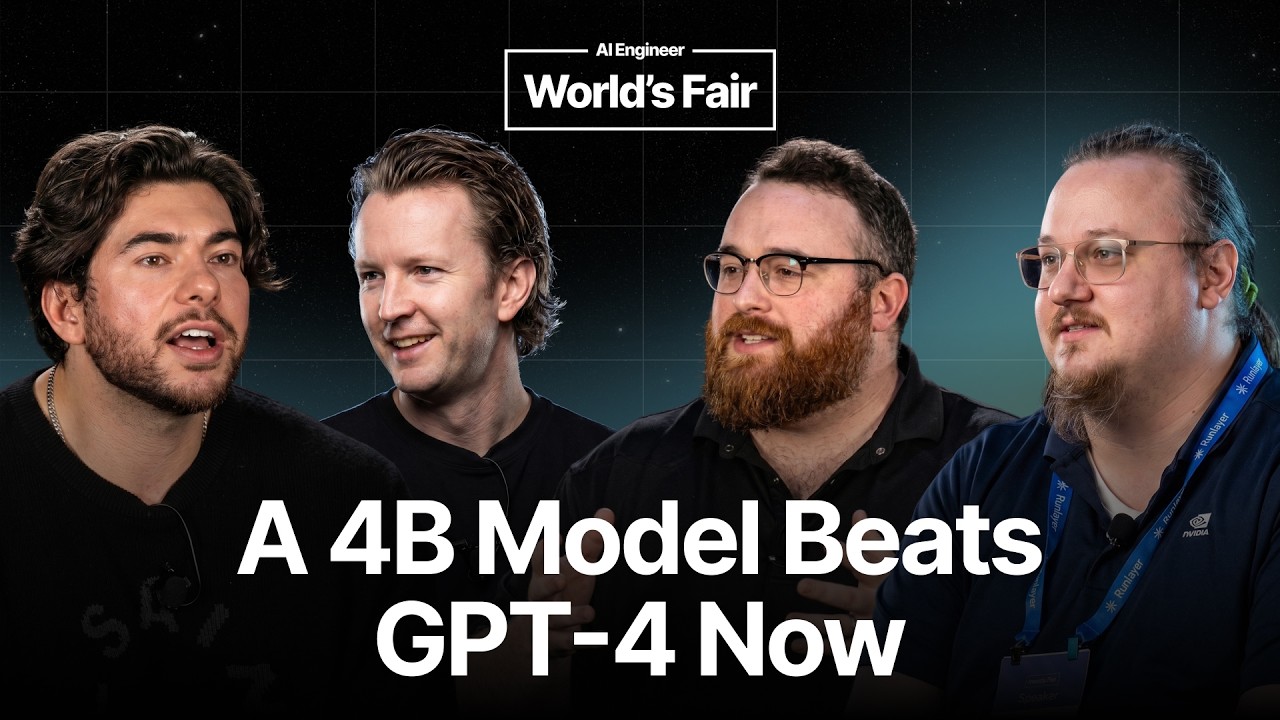
Local Models: Trust, Control, Optimization — Carter Abdallah, NVIDIA
Aug 7, 2026 · 43:21
NVIDIA's Carter Abdallah, Prime Intellect's Vincent Weisser, Arcee's Lucas Atkins, and NVIDIA's Chris Alexiuk argue open-weight models are the trustworthy foundation for enterprise and local AI. Atkins separates trust from safety: when Anthropic pulled Fable, enterprises chose Chinese open models for guaranteed availability, and open models are inspectable unlike closed APIs. Arcee pretrained a 400B model in six months; Weisser cites a customer that specialized an open model for finance in a week or two, beating Opus at a fraction of Haiku's cost. Alexiuk calls open weights the fix for 'mismanaged genius' and expects capable local models on MacBooks within a year; the panel predicts Fable-level open models within a year and hopes local-model use rises from a rounding error to 10–15%.

We Vetted 2000 AI Skills Before They Reached Developers — Lucas Palma, Nubank
Jul 29, 2026 · 16:24
Lucas Palma, product security manager at Nubank, explains how his team built Skill Vector to vet AI skills as supply chain risks inside a regulated bank, scanning over 2,000 skills before they reached developers. The tool uses a hybrid approach: deterministic checks catch destructive shell commands and credential requests, then an LLM reviews behavioral context missed by patterns. Across 2,000 skills, the system identified more than 1,500 risks, with 1,000 remediated immediately and a few blocked entirely from the internal marketplace. Key lessons include treating skills like any dependency, running local scans alongside CI enforcement, and requiring proper human-in-the-loop approval rather than AI self-confirmation. Palma also applies the same gates to MCP servers, rules, and third-party plugins, pushing for a trusted canonical marketplace where every entry is scanned before distribution.
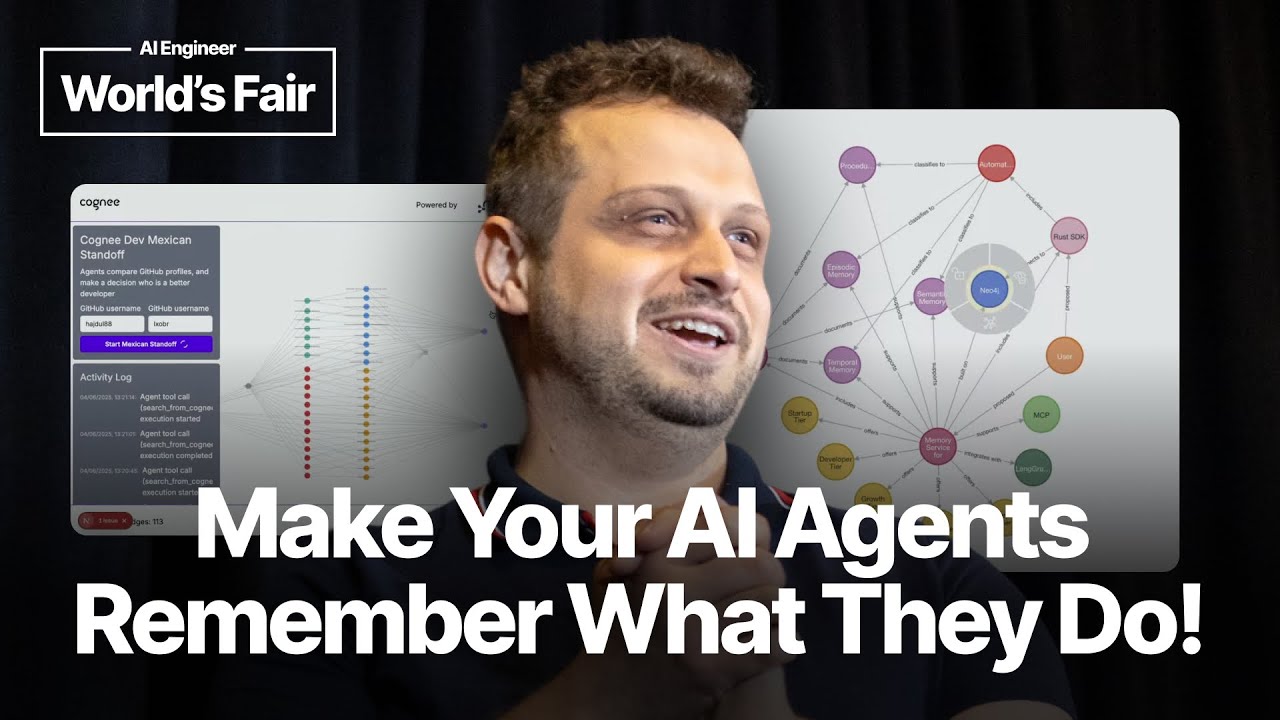
Memory Masterclass: Make Your AI Agents Remember What They Do! — Mark Bain, AIUS
Jun 27, 2025 · 51:25
Mark Bain, Vasilia Markovits, Alex Gilmore, and Daniel Chalev demonstrate that AI memory requires causal relationships and graph databases, not just vector similarity, to solve hallucinations and enable agentic workflows. Bain argues that memory is any data affecting change, and that attention, diffusion, and VAEs follow the same geometric principles as gravity and entropy. Alex shows Neo4j's MCP server storing semantic memory as entities and relationships retrieved across conversations. Vasilia demos Cognee building semantic graphs from GitHub data for agentic hiring decisions. Daniel presents Graphiti's domain-aware memory using custom Pydantic schemas to filter irrelevant facts. Bain introduces a GraphRAG chat arena that switches between memory solutions on a single Neo4j graph, testing different implementations for episodic and temporal recall.
Powered by PodHood