
Dan
GuestGuest on AI Engineer.
4 episodes

How to build an AI-Native Health Company — Dan Feng, Maven Clinic
Aug 19, 2026 · 17:19
Dan Feng of Maven Clinic says becoming AI-native means rewiring hiring, planning, code review, and reliability, not just adding tools. Maven hires engineers who solve ambiguous problems independently, keeps a one-year vision only directional, commits to two-to-four-week sprints, and treats three-to-six-month plans as unplannable because models change too fast. Engineers now write thousands of lines daily, so PRs are capped at 500 lines, engineers can self-certify simple changes but stay accountable, and rubber-stamp approvals are false confidence. Reliability is tiered: a scheduling failure one out of 1,000 times is tolerable because users retry, but reimbursement claims require multiple models to agree on the same receipt and integration tests to pass repeatedly.
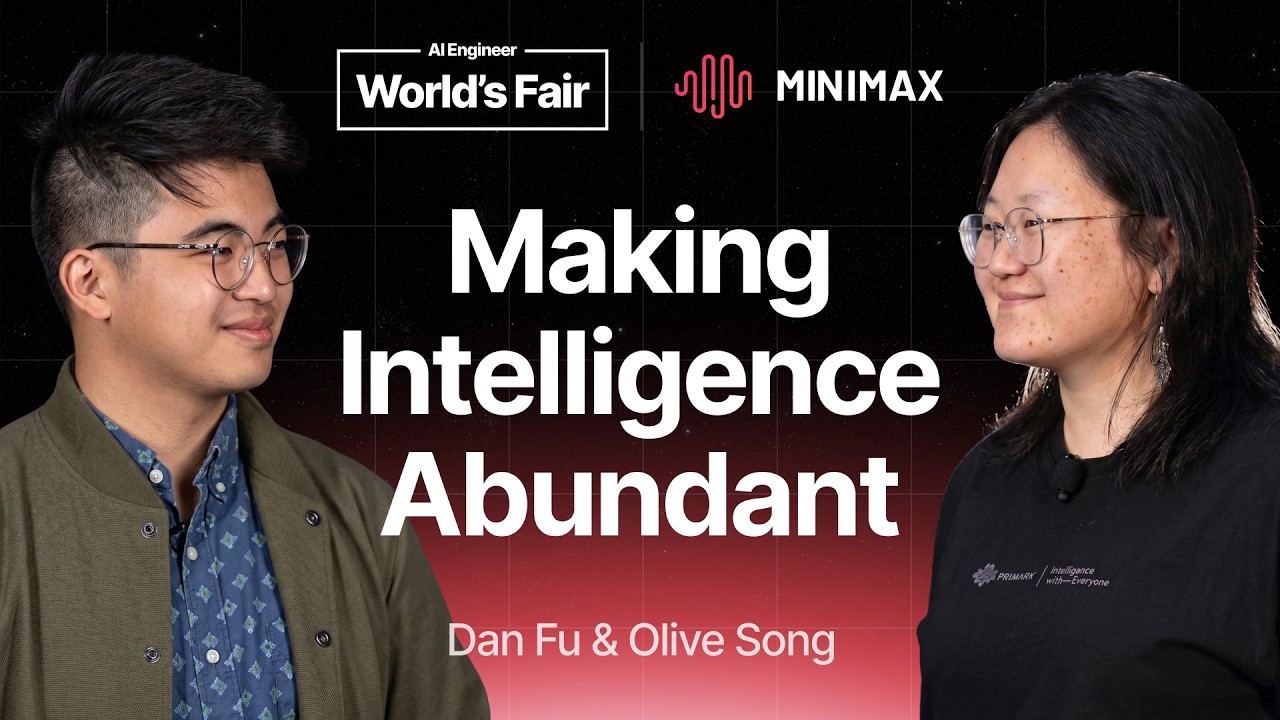
Agents at Scale: Inside MiniMax's Model and the Infrastructure Behind It — Dan Fu and Olive Song
Jul 31, 2026 · 20:14
Olive Song, RL lead at MiniMax, and Dan, Together AI's VP of Kernels, argue that open-weight MiniMax M3 is closing the gap to frontier labs via community feedback and inference optimization. Dan details the day-zero stack: GPU kernels for M3's sparse attention, KV cache at million-token contexts, and adapting to agentic workloads that upload codebases. Song says M3 trains multimodal from scratch to prevent text-vision collapse, and uses RL with environment design and rewards for long-horizon tasks like replicating a 12-hour iClear paper, plus validation/test splits to avoid hacking. Together's Parallel Kernel Bench holds unsolved problems, so overfitting it yields kernels the company deploys. Both see self-evolution and better GPU utilization as why open models keep accelerating.

Case Study + Deep Dive: Telemedicine Support Agents with LangGraph/MCP - Dan Mason
Jun 22, 2025 · 1:56:13
Dan Mason of Stride presents a case study on building autonomous agents for telemedicine support, replacing a human-driven button-pushing workflow with LangGraph, Claude, MCP, and a Node.js/React/MongoDB stack, achieving roughly 10X capacity increase. The LLM-driven virtual operations associate ("Ava") assesses patient messages, updates state with anchors and scheduled messages, and passes proposals to an evaluator agent that scores confidence and complexity, escalating to humans below 75% confidence. Mason explains how treatment "blueprints" in Google Docs are read directly by the LLM instead of using RAG, enabling new treatments to be added without writing code. He details the eval system using LLM-as-a-judge via PromptFu and retry logic for tool-calling errors, and discusses trade-offs around confidence scoring, prompt caching, and model selection (Claude for steerability). The team includes two software engineers, one designer, and Mason, who wrote most LangGraph code with AI assistance (Kline).
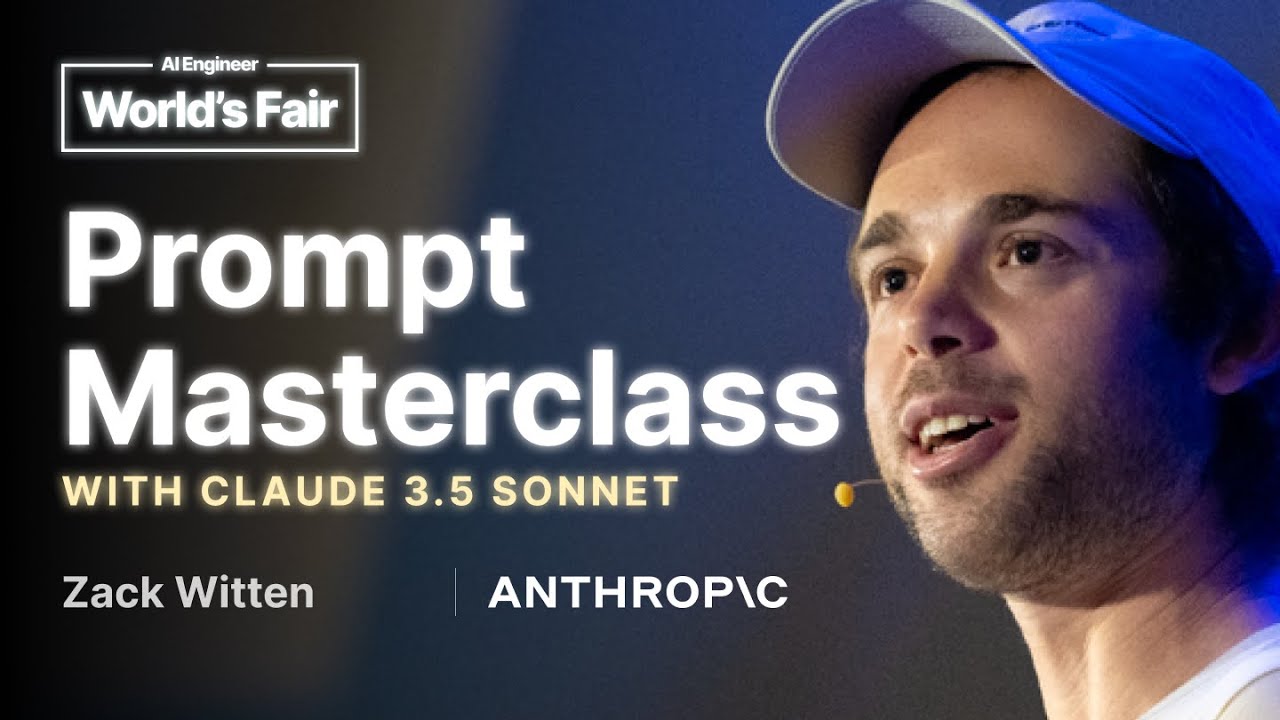
Building with Anthropic Claude: Prompt Workshop with Zack Witten
Aug 17, 2024 · 1:34:56
In this live prompt engineering workshop, Anthropic's Zack Witten and Jamie Neuwirth demonstrate techniques for improving Claude prompts in real time, using the Anthropic console. They show that XML tags clearly separate prompt sections, that placing instructions after information improves adherence, and that prefilling assistant responses with opening JSON or tags reliably forces JSON output without preamble. Witten advises using stop sequences and code to handle formatting rather than over-prompting, and emphasizes that few-shot examples—especially contrastive pairs with reasoning—drive more improvement than any other technique. The workshop covers role-playing multiple personas by routing via code, mitigating hallucinations by extracting quotes before summarization, and grading translations with chain-of-thought and fine-grained examples.
Powered by PodHood