
JP Morgan
CompanyA company discussed on AI Engineer.
2 episodes
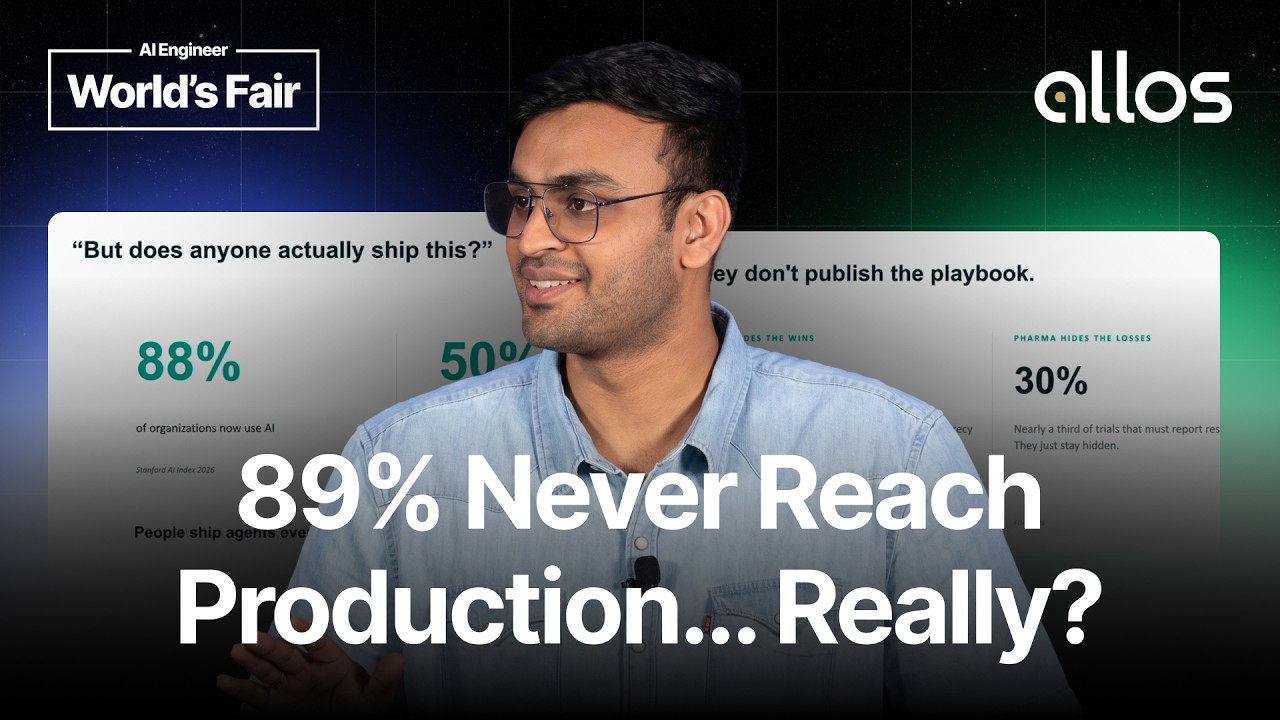
Trading Desks to Clinical Trials: Parallels in Applied Vertical AI — Ayush Bhardwaj, Allos AI
Aug 19, 2026 · 20:02
Ayush Bhardwaj, who applied AI at a hedge fund before pharma tech startup Allos AI, argues vertical AI projects die from not being able to judge whether they work. His seven-step recipe: narrow tasks, proprietary data, expert-modeled prompts, observability, then hiring the user—a domain expert—because using LLM-as-judge is a "stupid mistake" that jargons its way out. Verifiable rewards fail in finance and pharma: no answer keys, and data is withheld—30% of firms never disclose clinical trials, and the FDA publicly reminded over 2,000 sponsors in 2026. He says 89% of enterprise AI agents never reach production; the fix is endless expert-in-the-loop learning, starting with error analysis as highest ROI. Moat is never model or infra; only curated domain expertise and proprietary data matter.
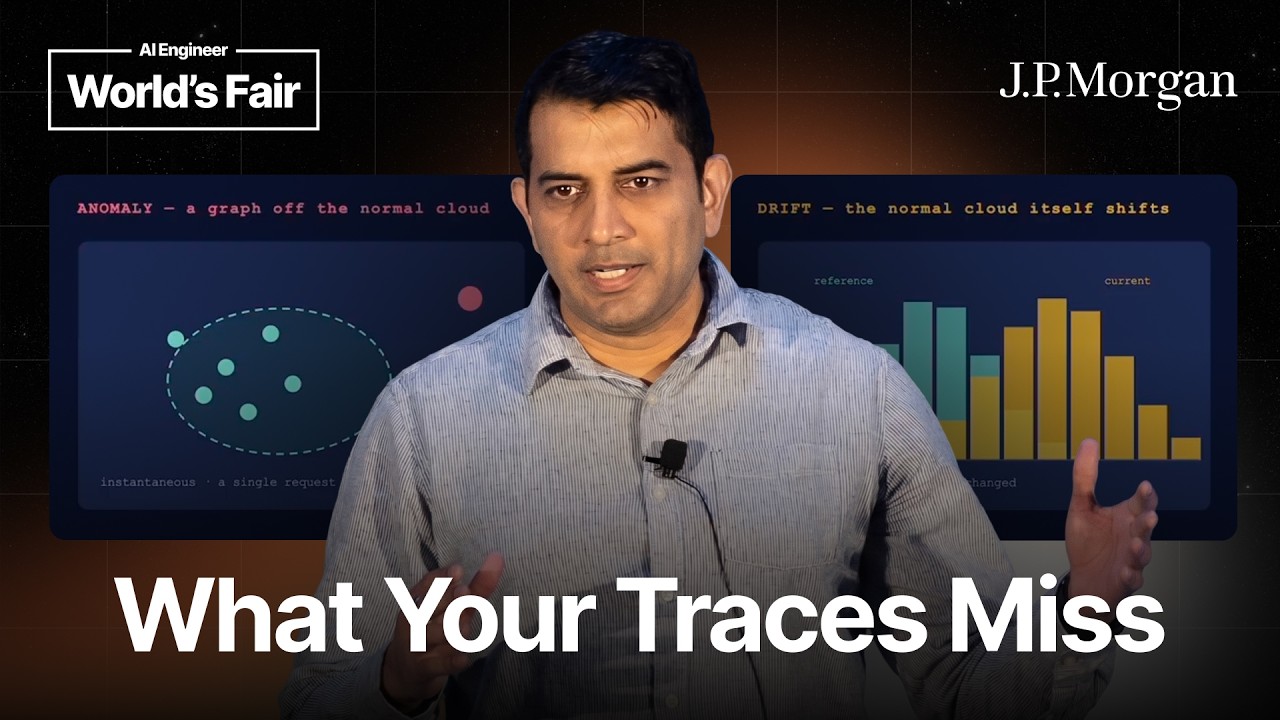
Learned Execution Graphs for Anomaly Detection & Drift in APIs — Ritvik Pandya, JP Morgan Chase
Jul 23, 2026 · 19:38
Ritvik Pandya of JP Morgan Chase presents Learned Execution Graphs, a method that models each API request as a short-lived DAG of middleware steps learned from telemetry at over 1,600 requests per second. The system detects anomalies by comparing actual execution against a learned baseline, localizing deviations to exact nodes instead of whole endpoints. In production it flagged a 41x deviation at a single node that service-level monitoring missed, cutting root cause from hours to under 30 seconds. Pandya distinguishes one-off anomalies from drift, categorizing drift into structural (added/removed steps), volume (scaling needs), and covariate (shifting request demographics), using per-client baselines and KL divergence rather than a single threshold. The approach uses tiered checks: a cheap first check only escalates when the graph signals a real change, reducing false alarms and enabling faster automated responses.
Powered by PodHood