
HubSpot
CompanyA company discussed on AI Engineer.
2 episodes

How to avoid disaster when vibe-coding a billing engine — Andrew Garvin, Stripe
Aug 28, 2026 · 17:49
Andrew Garvin, co-founder of Metronome, the usage-billing platform Stripe acquired this year in its largest deal ever, argues that billing engines carry deep business logic, so a coding agent should build a test environment while a human stays in the loop — demonstrated by a Stripe Projects workflow replicating Lovable's pricing model. He demonstrates a billing sandbox that provisions a customer, metered usage, scoped credit pools for builds, plan mode, cloud and gateway calls, and a draft invoice, using portable skills files and verbose errors so the agent can self-correct. He separates agent as product, buyer, and user, pointing to HubSpot's move from seats to credits as one agent does the work of many logins. Stripe's CLI use by coding agents has risen exponentially.
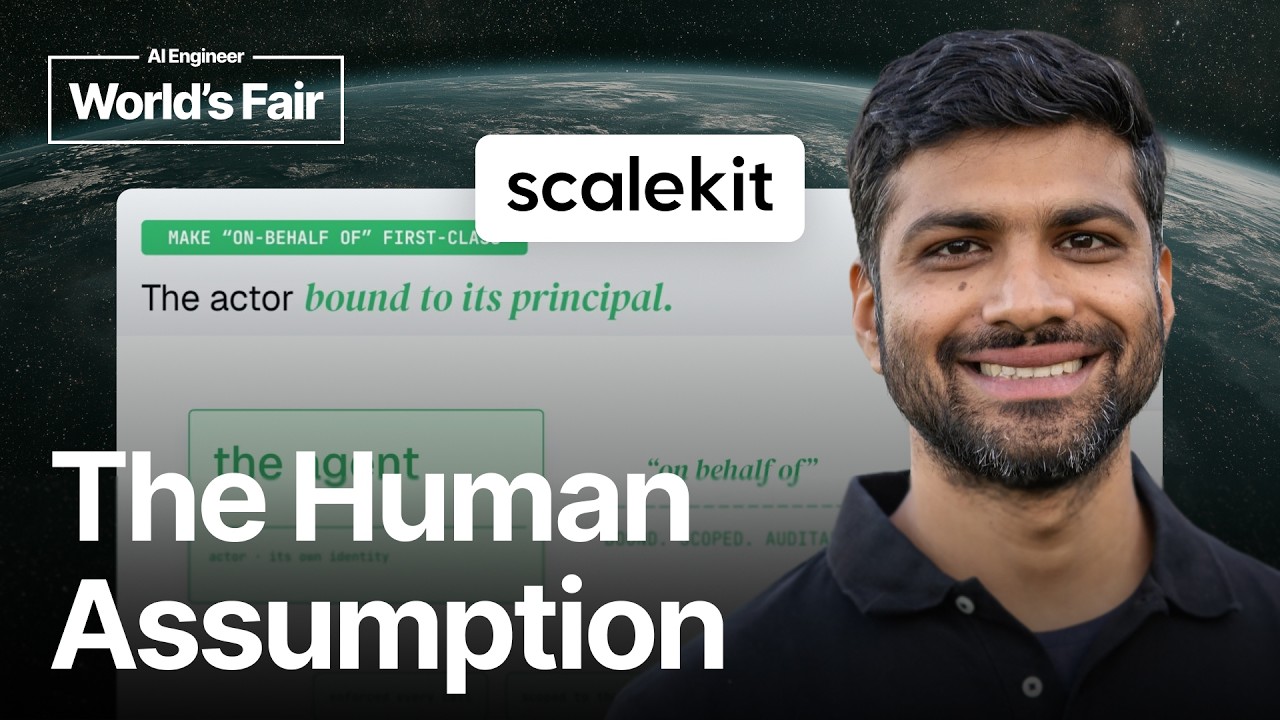
You Didn't Ship a Bug. You Just Wrote It for a Human. - Ravi Madabhushi, Scalekit
Jul 19, 2026 · 12:50
Ravi Madabhushi, co-founder of Scalekit, explains why infrastructure built for humans breaks when AI agents act 60 times faster than users, citing a production database spike caused by a 'last seen' timestamp updating every tool call. He argues that OAuth scopes, designed for deterministic human-written programs, cannot constrain non-deterministic agents, which need attribute-level, time-bound, and principle-scoped permissions. Madabhushi warns that 60% of LLM errors stem from rate limits designed for humans, not agents, and advocates for just-in-time authorization and absolute visibility into every agent action—who took it, on behalf of whom, and when authorized. He concludes that without deterministic guardrails, teams are merely 'praying' agents won't delete production data.
Powered by PodHood