
FDA
CompanyA company discussed on AI Engineer.
2 episodes
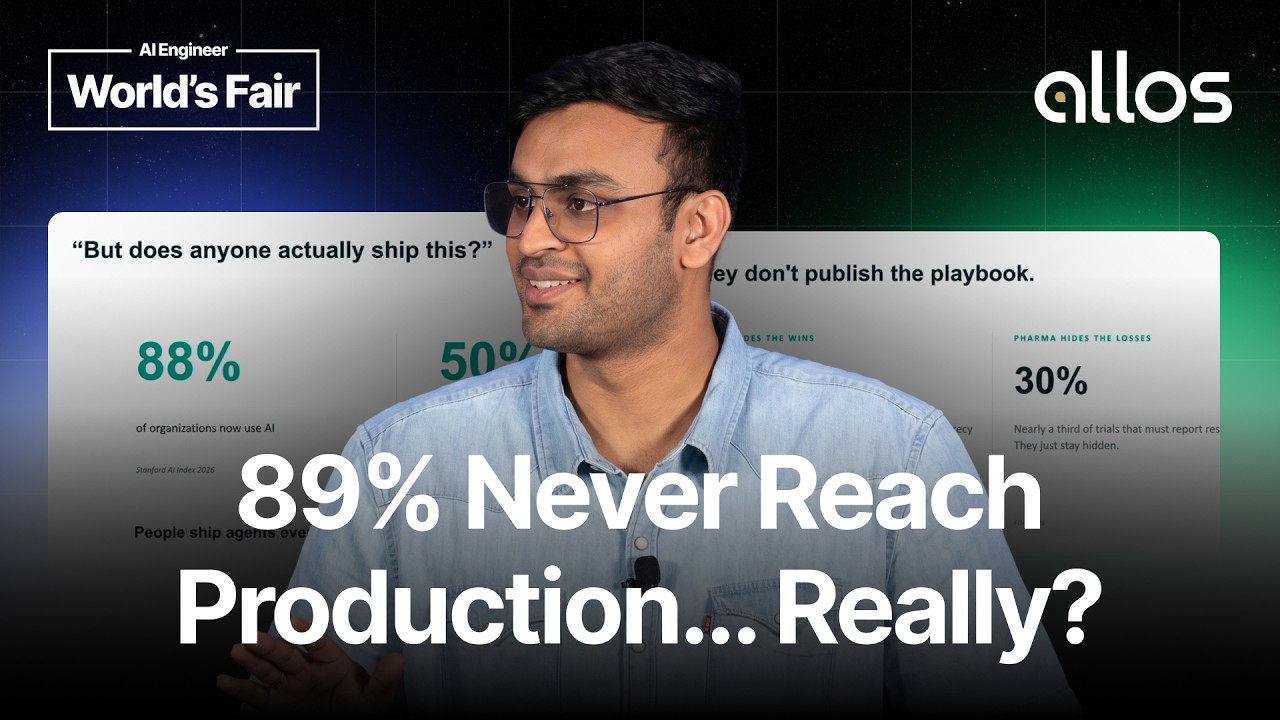
Trading Desks to Clinical Trials: Parallels in Applied Vertical AI — Ayush Bhardwaj, Allos AI
Aug 19, 2026 · 20:02
Ayush Bhardwaj, who applied AI at a hedge fund before pharma tech startup Allos AI, argues vertical AI projects die from not being able to judge whether they work. His seven-step recipe: narrow tasks, proprietary data, expert-modeled prompts, observability, then hiring the user—a domain expert—because using LLM-as-judge is a "stupid mistake" that jargons its way out. Verifiable rewards fail in finance and pharma: no answer keys, and data is withheld—30% of firms never disclose clinical trials, and the FDA publicly reminded over 2,000 sponsors in 2026. He says 89% of enterprise AI agents never reach production; the fix is endless expert-in-the-loop learning, starting with error analysis as highest ROI. Moat is never model or infra; only curated domain expertise and proprietary data matter.

Guardrails First: Engineering Member-Facing Health AI — Rashi Agrawal, Hinge Health
Aug 19, 2026 · 21:49
Rashi Agrawal, who leads AI/ML at Hinge Health, argues most healthcare AI safety failures are architectural decisions made before a token is generated, not model failures. With 40 million people self-triaging, she cites a chatbot telling a 60-year-old to take sodium bromide, Mount Sinai finding under-triage of life-threatening emergencies half the time, and ECRI ranking chatbot misuse the top 2026 hazard. Her architecture puts PHI stripped at the pipeline boundary, irreversible decisions like 911/988 routing and identity verification in deterministic code above the prompt, and continuous judges scoring live traffic. For launch decisions, she offers five rules — worst case wins, default to the safer mistake, calibrate to revealed tolerance — and says verify the judge before changing the agent.
Powered by PodHood