
Coinbase
CompanyA company discussed on AI Engineer.
6 episodes

Agent Spending Without Controls — Rodrigo Coelho & Pranav Maheshwari, Edge & Node
Sep 1, 2026 · 20:48
Rodrigo Coelho and Pranav Maheshwari of Edge & Node argue agents are only as capable as the paid tools they can access, and agentic payments scale only with a compliance layer. Coelho cites The Graph's 1.8 trillion onchain queries and Edge & Node's 2021 query micropayments citing the HTTP 402 spec before Coinbase's x402. Rails built for humans can't serve agents transacting at machine speed, so enterprises stall until a chief legal officer signs off without risking fines in the billions. Maheshwari demos the same Mastercard prompt in two Claude Cowork terminals: without Ampersand's skill file it returns only the email format; with it, the agent pays a fraction of a cent and gets the email, location and handle. A final demo rejects a sanctioned wallet once TRM screening turns on.

x402 isn’t good (yet) — Jan Curn, Apify
Sep 1, 2026 · 20:48
Jan Curn, founder and CEO of Apify, argues that x402, Coinbase's HTTP 402-based agentic payments standard, is promising but still has rough edges. Drawing on Apify's launch of 20,000 tools on x402 alongside Coinbase, he explains how the protocol works: a client signs a payment, a facilitator verifies it, and only then does the server settle on-chain. He details the double-spending window between verification and settlement, the conflict between x402's mandatory 402 response and MCP's 401, and why metered billing pushed Apify to charge fixed amounts and refund the remainder. He also explains why crypto, unlike credit cards, suits micropayments and one-way agent transactions where buyers cannot dispute payments.

When AI Agents Pay and Sellers Monetize: Building x402 Apps on AWS — Anil Nadiminti, AWS
Sep 1, 2026 · 20:41
Anil Nadiminti, Senior Solutions Architect at AWS, presents AgentCore Payments — a service that lets AI agents autonomously discover, authorize, and execute payments for premium content over the x402 protocol. He explains how AgentCore handles paywalls through wallet support via Coinbase, with KMS-secured secret storage keeping private keys safe. Bot detection verifies trusted agents while blocking malicious ones, and per-session budgets with spend limits keep settlement instantaneous at internet speed. Real-time traffic analysis and observability throughout the stack ensure payment connectors, MCP5 integration, and web scraping all operate without exposing credentials — no centralization required, no SDK change, and no friction for developers building agentic applications.
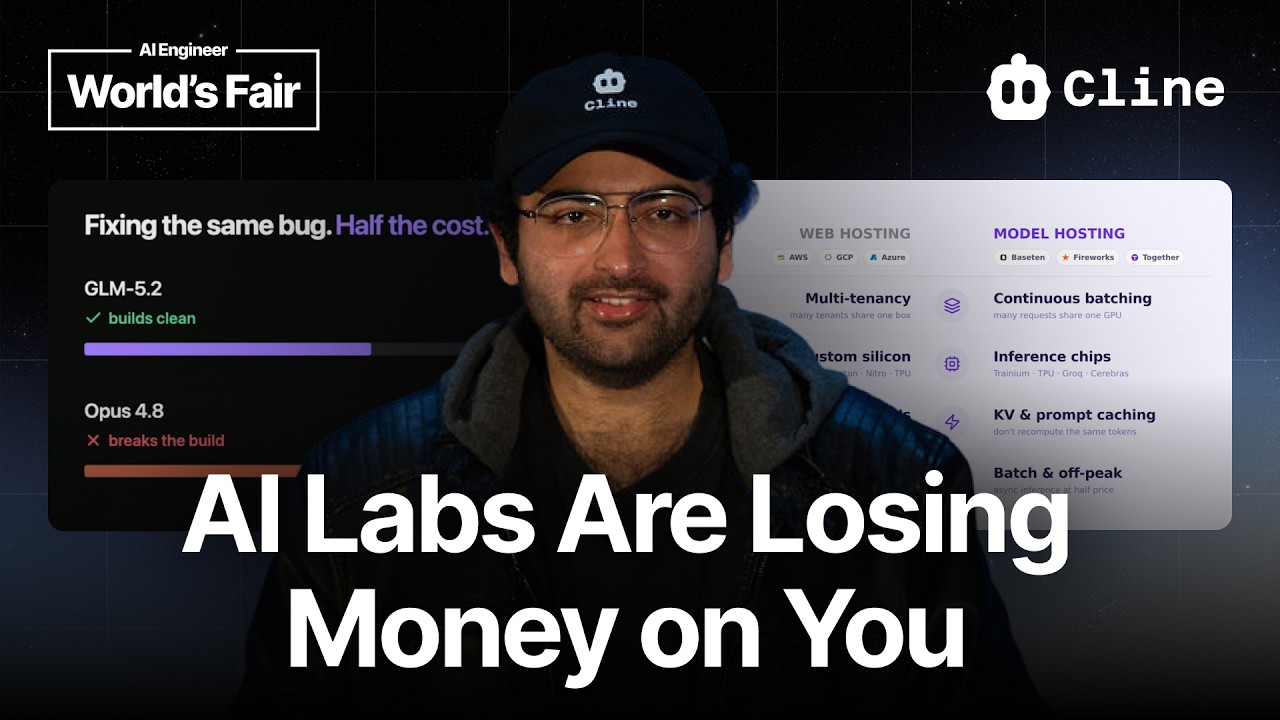
Open Source Is Dead. Long Live Open Source. — Saoud Rizwan, Cline
Aug 7, 2026 · 17:30
Saoud Rizwan, founder of Cline, argues that AI has killed the community side of open source while open weights models win on economics. He cites Zig banning AI from PRs, curl weighing shutdown of its bug bounty over AI-generated reports, and tldraw auto-closing pull requests, plus a LiteLLM compromise that stole credentials for three hours. Rizwan makes the case that closed labs' subsidized subscriptions lead to lock-in and price gouging, while open models like GLM match or beat Opus on cost and code quality — GLM used twice the tokens at half the cost and fixed a real Cline bug that Opus's faster fix left broken. He compares open weights to Facebook's Open Compute project and urges American labs to release open weights before foreign models become the standard.

How AI is changing Software Engineering: A Conversation with Gergely Orosz, @pragmaticengineer
Apr 21, 2026 · 26:42
Gergely Orosz explains how AI is reshaping software engineering, from token maxing at Meta, Microsoft, and Salesforce—where engineers use AI tools to inflate token counts out of fear of layoffs and performance reviews—to the broader shift in the engineer's role toward orchestrating agents rather than managing people. He notes that big tech companies like Uber, Airbnb, and Shopify are building custom internal AI infra (MCP gateways, coding agents) to stay ahead, even tolerating high churn for a six-month competitive edge. Shopify secured GitHub Copilot a year early by offering feedback from 3,000 engineers. Gergely also shares how The Pragmatic Engineer hit product-market fit: 100 paid subscribers before publishing, reaching 1,000 in six weeks, and becoming the #1 paid tech newsletter by focusing on two deep-dive articles per week for two years.

The rise of the agentic economy on the shoulders of MCP — Jan Curn, Apify
Jul 18, 2025 · 18:08
Jan Curn, founder of Apify, argues that MCP (Model Context Protocol) enables a future agentic economy where AI agents autonomously discover and purchase tools from other agents or businesses (B2A/A2A). He explains that Apify's marketplace of 5,000 Actors (Docker-based tools) now integrates with MCP, allowing agents to dynamically discover and call any Actor via tool discovery — a key MCP feature. Curn demonstrates this with Claude Desktop, where an agent uses Apify's MCP server to find a venue, scrape Twitter, and even fill a form via a nested MCP server from Browserbase, all without prior configuration. He notes that Apify pays creators over $250,000 monthly, with total Actor revenue exceeding $1.5M/month, and that any developer can publish an Actor to monetize their tools instantly across the ecosystem. The talk closes with open questions about reliability, trust, and whether autonomous agent interaction can lead to AGI.
Powered by PodHood