
Arcee AI
CompanyA company discussed on AI Engineer.
3 episodes
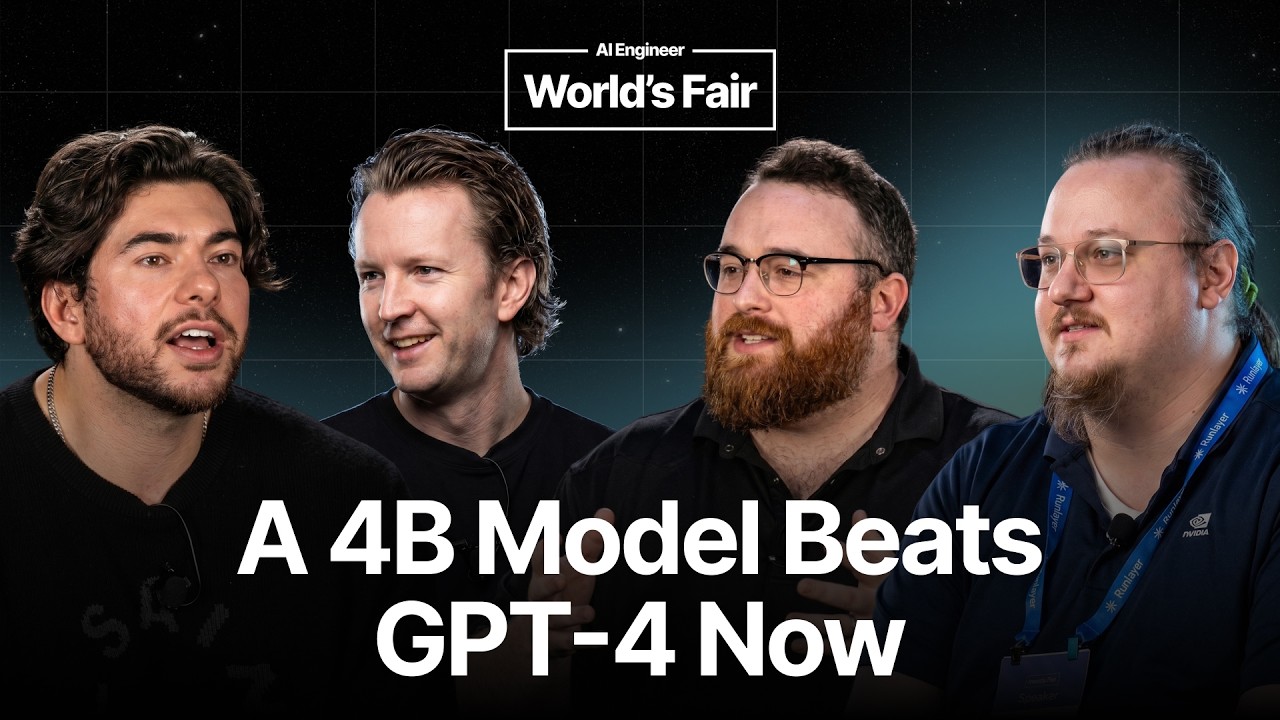
Local Models: Trust, Control, Optimization — Carter Abdallah, NVIDIA
Aug 7, 2026 · 43:21
NVIDIA's Carter Abdallah, Prime Intellect's Vincent Weisser, Arcee's Lucas Atkins, and NVIDIA's Chris Alexiuk argue open-weight models are the trustworthy foundation for enterprise and local AI. Atkins separates trust from safety: when Anthropic pulled Fable, enterprises chose Chinese open models for guaranteed availability, and open models are inspectable unlike closed APIs. Arcee pretrained a 400B model in six months; Weisser cites a customer that specialized an open model for finance in a week or two, beating Opus at a fraction of Haiku's cost. Alexiuk calls open weights the fix for 'mismanaged genius' and expects capable local models on MacBooks within a year; the panel predicts Fable-level open models within a year and hopes local-model use rises from a rounding error to 10–15%.
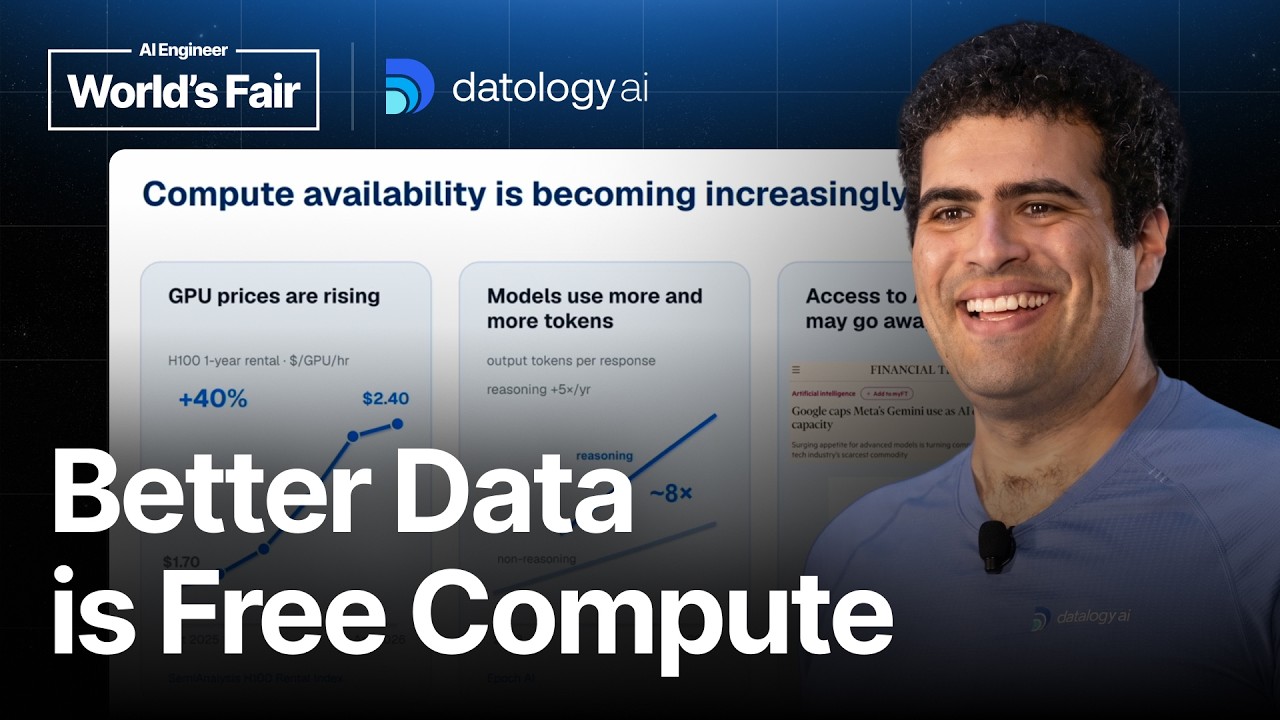
Data Quality Is the Compute Multiplier — Ari Morcos, DatologyAI
Jul 31, 2026 · 19:05
DatologyAI CEO Ari Morcos argues data quality is the compute multiplier: better data steepens scaling, so the same compute buys better models. His oil-refinery approach—clean, curate, create, compose—uses synthetic rephrasing for diversity; curation let a VLM beat the public Pareto frontier with 145x less training compute and match Qwen 3.5 with 35x fewer flops per correct answer. Curating English also boosts non-English via cross-lingual transfer. For Thomson Reuters, mid-training on curated legal data lifted LegalBench 5 points without catastrophic forgetting and tripled post-training gains. Arcee's Trinity Large, trained on 17 trillion curated tokens, matched GLM-5 and Kimi and beat Claude on some tasks for under $20 million, proving data curation is cheaper than compute.
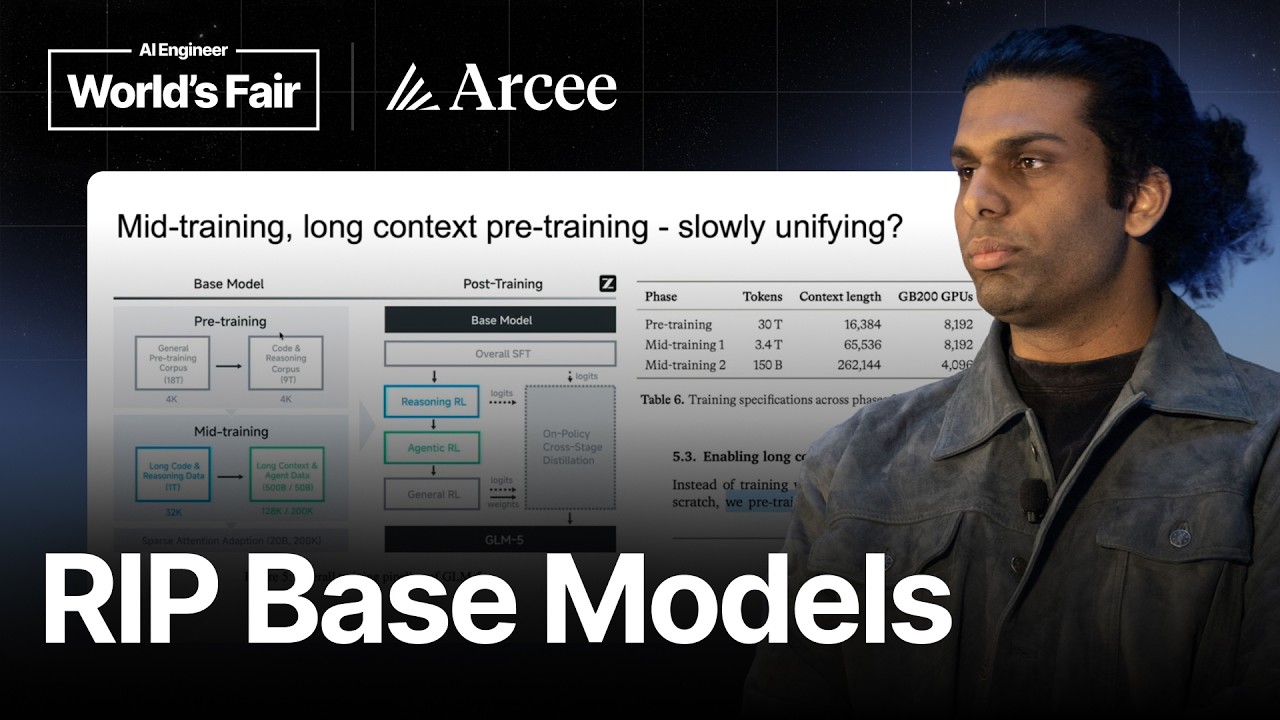
The Base Model Is Dead — Varun Singh, Arcee AI
Jul 31, 2026 · 17:45
Varun Singh, pre-training lead at Arcee AI, argues the base model is dead: it no longer just mirrors web text but must carry the prior that reinforcement learning builds on. He traces how web text fell from 85% of GPT-3's mix to 15% in MAI Thinking 1, with code and STEM dominating, and how Nemotron 3 Ultra pulls SFT-style Q&A data back into pre-training. Synthetic rephrasing, as used in Arcee's Trinity Large and Kimi K2, upsamples information to teach task shapes early. He warns that without post-training-flavored data early, MoE load balancing can break when SFT distributions differ, citing MAI's cranking of the balancing coefficient. He frames training as supervised learning vs RL, noting RL compute now rivals or exceeds pre-training, as with Compose 2.5, and argues the base model's job is to provide atomic skills for RL to compose.
Powered by PodHood